

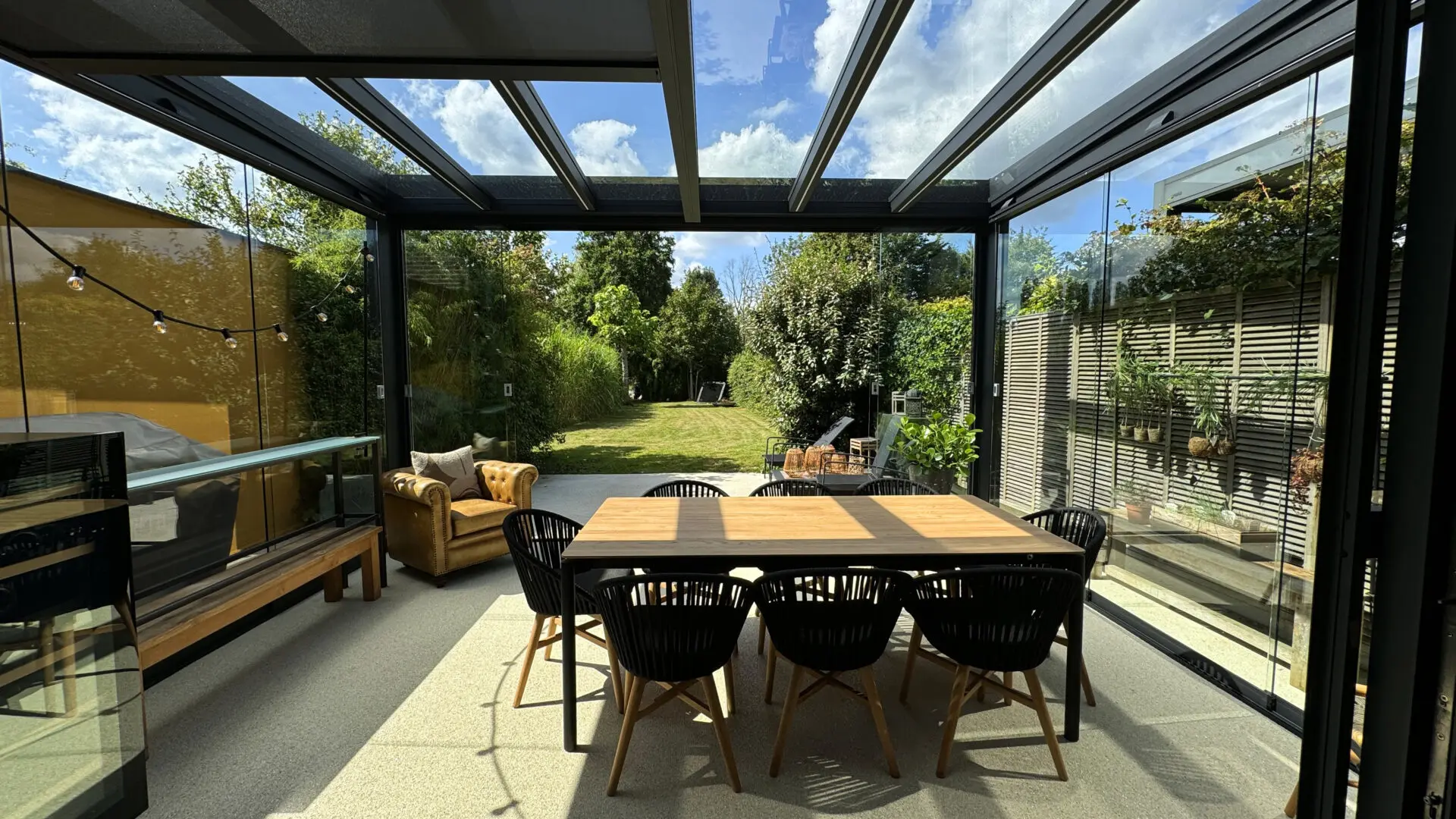
Glass Rooms vs Traditional Extensions
Planning Permission, Build Time, Disruption and Cost in the UK
When UK homeowners need more space, the decision often comes down to two options. A glass room or a traditional extension. Both add usable living space and can increase property value, but they differ significantly in how long they take, how much they cost, and how disruptive the process is.
This guide compares glass rooms and traditional extensions in practical terms. It focuses on planning permission, realistic build timelines, disruption to daily life, and typical UK costs. If you are deciding which route to take, this will help you make an informed choice.
Planning Permission Differences
Planning permission is one of the biggest factors that delays home improvement projects in the UK.
Glass rooms are often built under Permitted Development Rights. In many cases, this means planning permission is not required. As long as the structure is single storey, stays within height limits, and does not cover more than half of the original garden area, it can usually proceed without formal approval. Because glass rooms are visually lightweight and do not permanently alter the main structure of the house, they are generally viewed more favourably by planning authorities.
That said, planning permission may still be needed if your property is listed, located in a conservation area, or if the design exceeds permitted development limits. These cases should always be checked before proceeding.
Traditional extensions are more likely to require planning permission. This is especially true for rear extensions that exceed depth limits, double-storey builds, or designs that alter rooflines and elevations. When planning permission is required, homeowners should expect an application process that typically takes eight to twelve weeks, sometimes longer if revisions are requested or objections are raised. Architectural drawings and planning fees also add time and cost before any building work begins.
From a planning perspective, glass rooms usually allow projects to move forward faster and with less risk.
Build Time and Installation Speed
The difference in build time between a glass room and a traditional extension is significant.
Glass rooms are manufactured off-site and installed as a complete system. Once the design is approved and the components are produced, installation on site is quick. A typical project involves a site survey, followed by a manufacturing period of four to six weeks. The on-site installation itself usually takes between two and five days.
From initial survey to completion, most glass room projects are finished within six to ten weeks. The short installation time reduces exposure to weather delays and limits disruption.
Traditional extensions take much longer. The process usually begins with design work and drawings, followed by planning approval if required. Once construction starts, groundwork, foundations, structural walls, roofing, and internal finishes all take time. Even a modest single-storey extension commonly takes four to six months from start to finish. Larger or more complex builds can extend beyond that.
If speed and predictability are important, glass rooms clearly have the advantage.
Disruption to Daily Life
Living through building work is often underestimated by homeowners.
Glass room installations are relatively low impact. Because there is little excavation and no major structural work to the existing house, disruption is kept to a minimum. Noise is usually limited to a few days, and access to the home is rarely affected. Most homeowners can continue using their property as normal throughout the installation.
Traditional extensions are far more disruptive. Groundworks, structural alterations, and internal connections mean weeks or months of noise, dust, and trades moving through the property. Gardens may be inaccessible, materials are stored on site, and internal rooms may be affected. For families or people working from home, this level of disruption can be challenging.
If maintaining normal day-to-day living is a priority, a glass room offers a much smoother experience.
Cost Comparison in the UK
Cost is often the deciding factor, and the difference between the two options is substantial.
Glass rooms are generally more affordable because they require fewer labour hours and less structural work. In the UK, smaller glass rooms typically start from around £8,000 to £14,000. Medium to larger installations often fall between £15,000 and £25,000, depending on size and specification. High-end systems with advanced glazing, integrated shading, lighting, and heating can exceed £30,000.
Traditional extensions are priced by square metre and come with additional professional fees. A standard single-storey extension usually costs between £1,500 and £2,500 per square metre. A modest 15 square metre extension can therefore cost £25,000 to £40,000, with larger projects easily exceeding £50,000. Architect fees, structural engineers, planning applications, and building control inspections all add to the final figure.
For homeowners looking to add space without committing to a major financial outlay, glass rooms often provide better value.
Use, Comfort and Long-Term Value
Modern glass rooms are designed for year-round use when specified correctly. High-performance glazing, aluminium frames with thermal breaks, and integrated shading help control temperature and glare. With the right configuration, a glass room can function as a dining space, lounge, or home office throughout the year.
Traditional extensions offer higher insulation levels and are better suited for projects that involve relocating kitchens or bathrooms, or making permanent structural changes to the home. However, many homeowners find that a glass room delivers the extra space they need without the complexity and cost of a full extension.
You can explore premium glass room systems available through Shade-Space here:
https://shade-space.co.uk/brands/ke/glass-rooms/
Which Option Makes Sense for Your Home
A glass room is often the better option if you want a faster project, lower cost, minimal disruption, and fewer planning hurdles. It suits homeowners who want a bright, flexible living space without committing to months of building work.
A traditional extension may be more appropriate if you need a fully integrated structural addition or are planning major internal layout changes.
For many UK homes, glass rooms strike the right balance between usability, speed, and cost.