

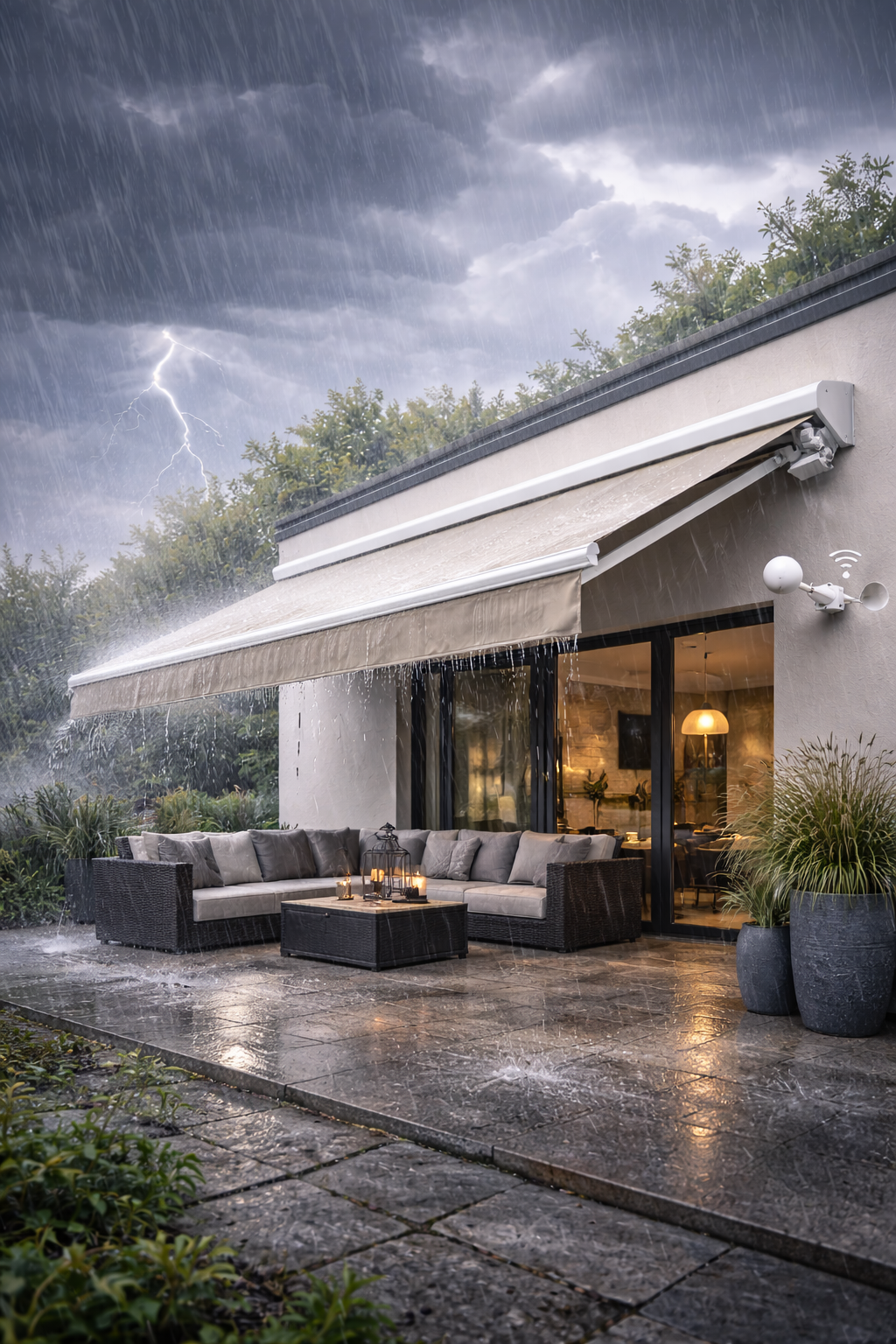
How Wind Ratings Affect Pergola and Awning Safety in the UK
Wind is the main reason outdoor shading systems fail.
In the UK, sudden gusts are common even on clear days. A system that works perfectly in calm weather can become unsafe within seconds if it is not correctly specified.
At Shade-Space, wind rating is one of the first factors we assess during a site survey. Here is why it matters and how it affects your pergola or awning.
What is a Wind Rating?
A wind rating defines the maximum wind speed a structure can safely withstand without damage or detachment.
Manufacturers test systems in controlled conditions. The result is usually expressed in metres per second, kilometres per hour or the Beaufort scale.
For context:
-
Around 20–28 km/h: noticeable movement of loose objects
-
Around 40–50 km/h: difficult to use umbrellas or light parasols
-
Around 60 km/h+: structural stress begins on large fabric systems
Awnings and pergolas must be chosen based on realistic exposure, not average weather forecasts.
Why Location Changes Everything
Two properties in the same town can require completely different systems.
Wind exposure depends on:
- Building height
- Open surroundings
- Coastal proximity
- Corner positioning
- Rooftop installation
- Street wind tunnels between buildings
A sheltered garden may safely use a wider projection awning.
A fifth-floor terrace may require a fixed pergola or louvre roof instead.
We regularly see awnings fail not because of product quality, but because the exposure level was underestimated.
Awnings vs Pergolas in Wind
Retractable awnings rely on tensioned fabric. They perform well in light wind but must retract in stronger gusts.
Modern motorised awnings include wind sensors that automatically close the system when thresholds are reached. This prevents arm damage and wall bracket failure.
Pergolas and louvre roofs are structural systems. They are anchored into the ground or building structure and can tolerate significantly higher loads when engineered correctly.
However, they are not immune to poor installation. Incorrect fixings are the most common cause of failure.
The Importance of Fixings and Substrate
The strength of a shading system is only as good as what holds it in place.
During installation we assess:
- Wall material
- Cavity depth
- Steel or concrete presence
- Load spread requirements
For example, fixing into brick facing alone is unsafe for large projections. Proper installation may require chemical anchors into structural masonry or steel plates to distribute load.
Skipping this step reduces the real wind rating dramatically.
Coastal and Rooftop Installations
Coastal properties experience stronger and more frequent gusts. Salt air also affects mechanical parts over time.
Rooftop terraces face uplift pressure. Wind flows upward along building faces and lifts fabric systems from below.
In these locations, we often recommend:
- Smaller awning projections
- Freestanding pergolas
- Louvre roof systems with certified load ratings
Choosing the correct system prevents ongoing repairs and protects users underneath.
Sensors and Automation Improve Safety
Wind sensors are one of the most effective safety upgrades for retractable systems.
They detect vibration or movement and automatically retract the awning. This works even when the property is empty.
For commercial premises, automation reduces liability risk. Staff do not need to monitor weather conditions constantly.
Maintenance Affects Performance
Dirt buildup, worn springs and loose bolts reduce resistance to wind loads.
Annual servicing keeps the system operating within its tested performance range. For commercial venues, we recommend pre-season inspections before spring trading begins.
Choosing the Right System
A larger product is not always better. Oversized projections increase leverage forces and risk during gusts.
The correct approach is matching structure type to exposure level.
Sheltered patio: retractable awning may be ideal.
Open terrace: pergola or louvre roof usually performs better.
This decision should be based on site assessment rather than catalogue selection.
Why Work With Shade-Space
We measure exposure, mounting structure and usage before specifying any system. This ensures the installed product performs safely in real conditions, not just showroom conditions.
If you are planning a new installation or replacing a damaged system, a wind assessment should come first.