

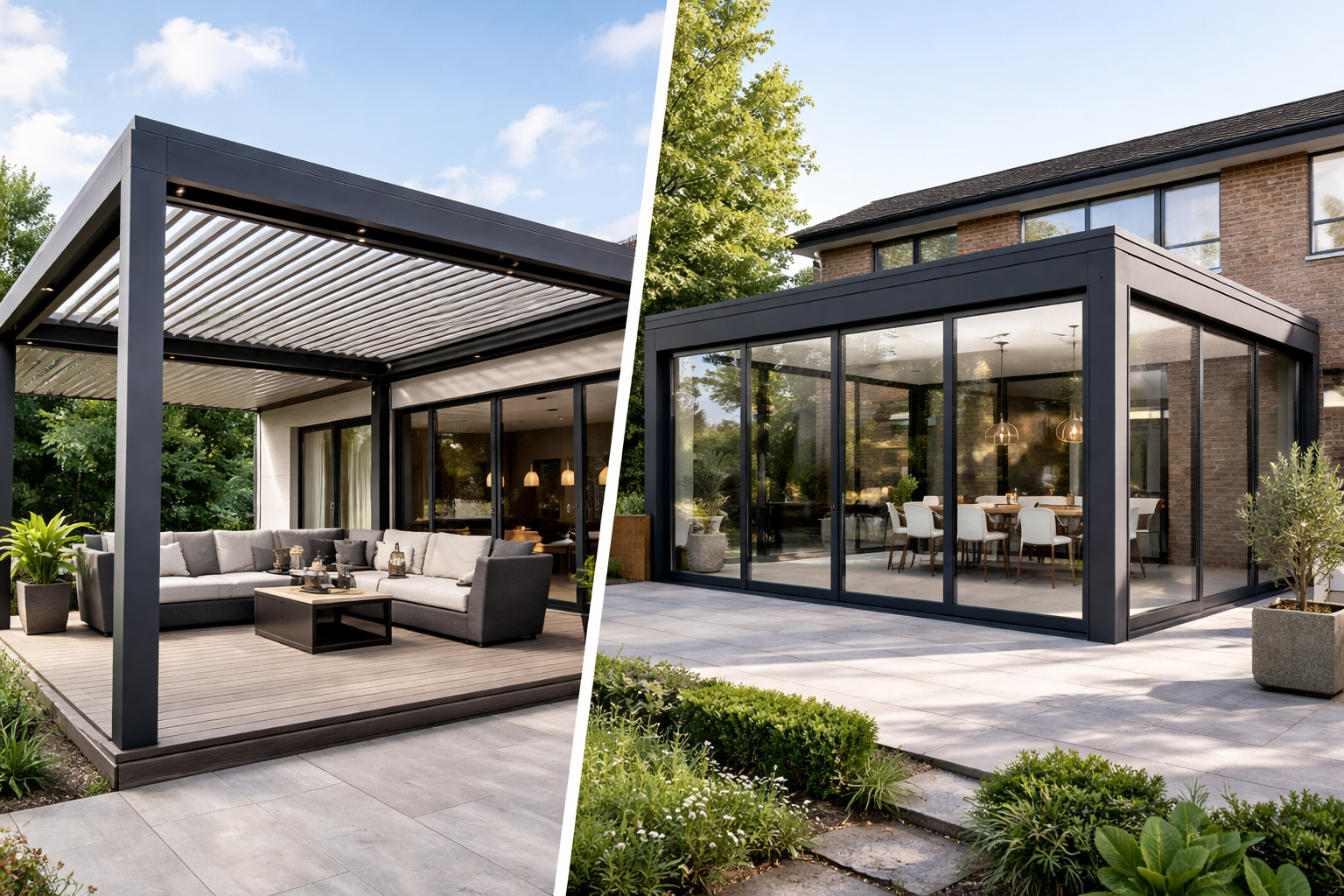
Louvre Roof vs Glass Room: Which is Right for Your Outdoor Space?
Choosing between a louvre roof system and a glass room is a strategic decision. The right option affects how you use the space, how much revenue you generate, how long installation takes, and whether planning permission becomes an issue.
At Shade-Space, we install both solutions across residential and commercial projects. Here is a clear breakdown to help you decide.
What is a Louvre Roof?
A louvre roof system uses adjustable aluminium blades that rotate to control sunlight, shade, and airflow. The roof can fully close for rain protection or open to allow ventilation and natural light.
Most systems are motorised and include integrated drainage. Water is channelled through concealed downpipes within the structure.
This makes louvre roofs ideal for flexible, all-weather outdoor spaces that still feel open.
What is a Glass Room?
A glass room is a fixed structure enclosed with glazing. It often includes a solid or glazed roof and sliding or fixed glass panels on the sides.
Unlike a louvre system, a glass room creates a fully enclosed environment. When paired with heating, it functions more like an extension than an outdoor covering.
Design and Aesthetic Differences
A louvre roof delivers a contemporary, architectural look. Slim aluminium frames and rotating blades create clean lines that suit modern homes, restaurants, and office terraces.
A glass room feels more permanent. It visually integrates with the building and provides uninterrupted views. However, the fixed glazing means less airflow and a more enclosed feel.
If you want flexibility and openness, a louvre roof performs better.
If you want a defined indoor-style space, a glass room may suit you.
Weather Protection and Seasonal Use
Both systems offer rain protection. The difference lies in adaptability.
A louvre roof allows you to adjust the blades throughout the day. On warm days, you can open the roof to release heat. During rain, you close it fully. Add zip screens or sliding glass to increase shelter while keeping ventilation control.
A glass room provides constant enclosure. This protects from wind and cold but can trap heat during summer unless ventilation systems are included.
In the UK climate, flexibility often matters more than full enclosure.
Planning Permission Considerations in the UK
Planning permission requirements vary based on property type, location, and project size.
In many residential settings, louvre roofs fall under permitted development because they are considered garden structures rather than full extensions.
Glass rooms are more likely to require approval, especially if they significantly increase footprint or attach directly to the main property.
Commercial projects may require landlord consent and planning approval for either solution. Always check early in the process to avoid delays.
Installation Time and Disruption
Louvre roof installations are typically completed within two to four weeks depending on size and specification. Structural checks are required, but groundwork is minimal.
Glass rooms take longer. Foundations, glazing installation, and finishing works extend timelines. Projects can take four to eight weeks or more.
If speed and minimal disruption are priorities, louvre systems are often the faster route.
Cost Comparison
Costs depend on size, specification, and additional features.
As a guide:
Louvre roof systems for residential projects often start from the mid five-figure range. Commercial systems vary depending on span and integration features.
Glass rooms generally require higher structural investment. The need for glazing, foundations, and finishing can increase overall cost.
However, glass rooms may add more perceived property value in certain residential markets.
If you operate a hospitality venue, the return on investment often comes from increased covers and year-round use rather than property valuation.
Revenue and Commercial Impact
For hospitality venues, the goal is clear. More covers. Fewer weather cancellations. Longer trading seasons.
A louvre roof increases flexibility. You can host events in changing weather and adapt the space in real time. Many venues recover installation costs within two to three years depending on capacity expansion.
A glass room creates a premium enclosed dining environment. This works well for higher-end venues that prioritise controlled ambience over open-air flexibility.
Your target audience and pricing model should guide the decision.
Energy Efficiency and Comfort
Louvre systems reduce solar gain by adjusting blade angles. This helps manage heat near glass façades during summer.
Glass rooms can improve insulation when properly specified, but they may require additional ventilation or shading to prevent overheating.
Both systems can integrate lighting and heating. The difference lies in airflow control.
Maintenance Requirements
Aluminium louvre systems require routine cleaning and occasional servicing of motor components.
Glass rooms require cleaning of glazing panels and inspection of seals to prevent condensation or leakage.
Neither solution is high maintenance, but motorised systems require professional installation to ensure long-term performance.
Which One Is Right for You?
Choose a louvre roof if you want:
• Adjustable shade and airflow
• Faster installation
• Flexible seasonal use
• A modern architectural finish
Choose a glass room if you want:
• A fully enclosed extension-style space
• Maximum wind protection
• A permanent indoor feel
The right solution depends on how you plan to use the space and what return you expect from it.
Speak to Shade-Space
Every outdoor space is different. Structural constraints, planning considerations, and usage goals all affect the outcome.
Shade-Space provides site surveys, technical drawings, and tailored recommendations to ensure you choose the right system for your property.
If you are considering a louvre roof or a glass room, speak to our team to explore the most effective solution for your space.