

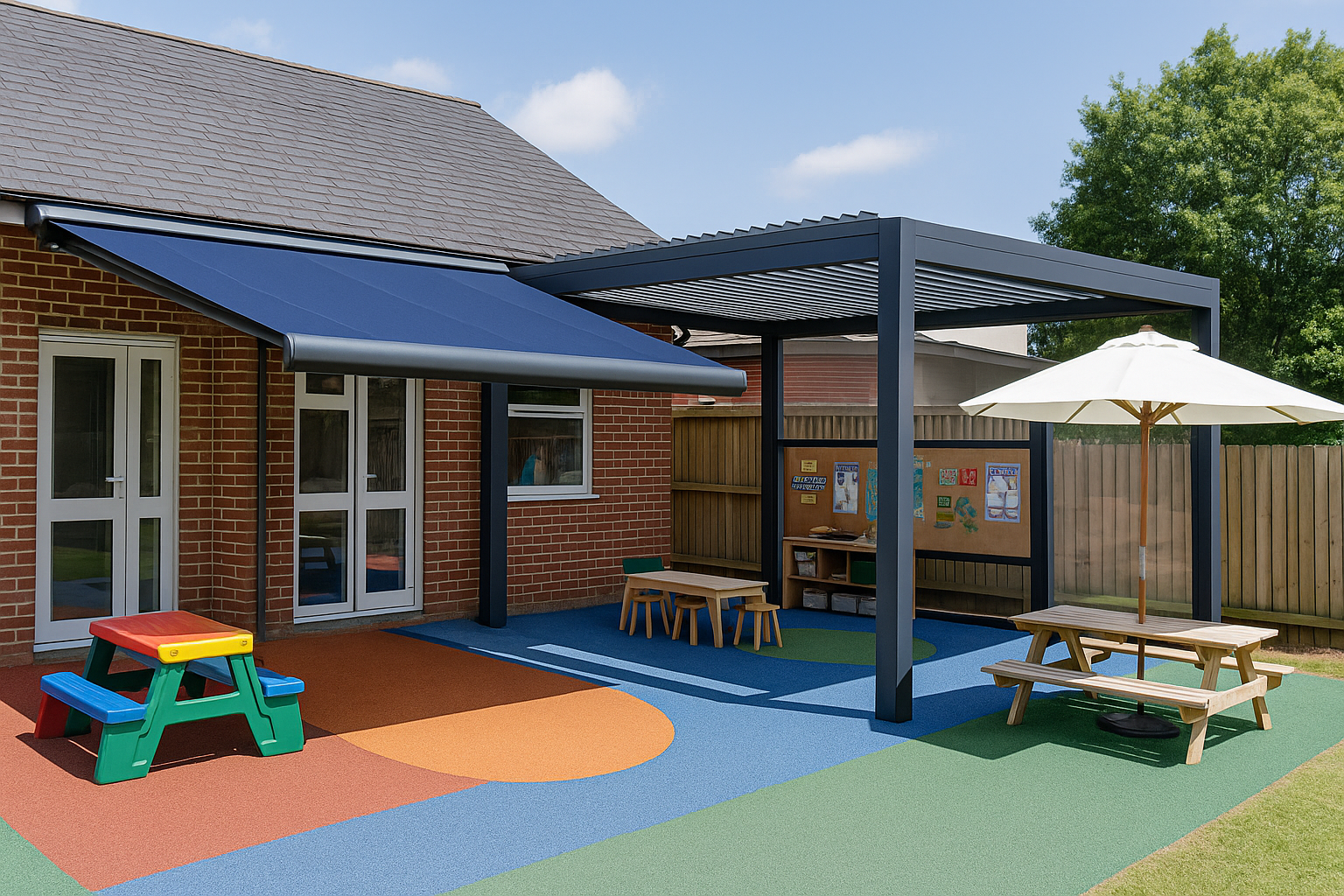
Shading Solutions for Schools, Universities & Public Buildings
Outdoor space plays a growing role across schools, universities and public buildings. These environments are no longer limited to indoor use. Courtyards, playgrounds, campuses and shared spaces are now used for learning, social interaction and daily activity.
However, without the right protection, these areas are often underused. Exposure to sun, wind and rain limits how frequently they can be used and how comfortable they are for students, staff and visitors.
Shading systems provide a practical solution. When designed and installed correctly, they improve comfort, increase usability and support the overall function of public spaces.
Why Shading Matters in Education and Public Environments
In schools and universities, outdoor areas support more than recreation. They are used for teaching, group work, breaks and wellbeing.
Direct sunlight can cause discomfort and increase the risk of overheating, particularly during warmer months. At the same time, light rain often disrupts planned outdoor activities.
In public buildings, such as community centres, healthcare facilities and civic spaces, outdoor areas need to remain accessible and comfortable for a wide range of users.
Shading systems help create controlled environments where people can spend time outdoors without being exposed to harsh conditions.
Supporting Outdoor Learning in Schools
Outdoor learning has become more common across UK schools. It supports engagement, improves focus and provides a different setting for teaching.
To make outdoor learning practical, schools need reliable shelter. Pergolas and canopy systems provide structured shade that allows lessons and activities to continue regardless of weather conditions.
These systems can be installed over playgrounds, outdoor classrooms or seating areas. They create defined spaces where students can gather comfortably while remaining protected.
For primary and secondary schools, this can significantly increase how often outdoor areas are used throughout the year.
Creating Functional Campus Spaces for Universities
University campuses often include large open areas such as courtyards, terraces and walkways. These spaces are used for studying, social interaction and events.
Shading systems help transform these areas into more functional environments. Pergolas and louvre roof systems provide shelter while maintaining an open, modern design.
Students benefit from comfortable outdoor spaces where they can work or relax between lectures. Universities also gain flexible areas that can be used for events, group activities or informal learning.
Well-designed outdoor spaces contribute to the overall campus experience and can support student satisfaction.
Improving Comfort in Public Buildings
Public buildings serve a wide range of users, including families, professionals and vulnerable groups. Outdoor areas must be accessible, safe and comfortable.
Shading systems can be installed at entrances, waiting areas and communal spaces to improve usability. Covered areas provide protection from sun and rain, making it easier for people to access facilities and spend time outdoors.
In healthcare or community settings, shaded outdoor spaces can also support wellbeing by offering calm and comfortable environments.
Key Shading Solutions for Public Sector Projects
Different environments require different approaches. The most common solutions include:
Pergolas
Provide structured shade for playgrounds, courtyards and seating areas. Suitable for both schools and public buildings.
Louvre roof systems
Offer adjustable control over sunlight and ventilation. Ideal for university campuses and modern public spaces.
Awnings
Work well for entrances, windows and smaller outdoor areas where flexible shading is required.
Canopy structures
Provide large-scale coverage for walkways, playgrounds and communal zones.
Each system should be selected based on how the space is used, the level of exposure and the specific requirements of the environment.
Safety, Durability and Compliance
In public and education settings, safety is critical. Shading systems must be designed to meet structural and compliance standards.
This includes considerations such as:
- Wind resistance
- Load capacity
- Fire safety where applicable
- Secure fixings and installation
- Durable materials suitable for high usage environments
Systems should also be low maintenance and built to withstand regular use over time.
Working with an experienced provider ensures that all technical and compliance requirements are properly addressed.
Increasing Use of Outdoor Space
One of the main benefits of shading systems is the ability to increase how often outdoor areas are used.
Spaces that were previously limited by weather conditions can become reliable environments for daily use. This improves the overall functionality of the building and enhances the experience for users.
For schools, this means more opportunities for outdoor learning and play.
For universities, it means better campus engagement.
For public buildings, it means improved accessibility and comfort.
A Practical Investment in Long-Term Use
Investing in shading systems is not only about immediate comfort. It is about making better use of existing space.
Rather than expanding buildings, organisations can improve the value of outdoor areas by making them usable throughout the year.
This approach supports both operational efficiency and user experience.
Speak to Shade-Space
Shade-Space works with schools, universities and public organisations to design and install shading solutions that are practical, durable and suited to each environment.
If you are planning to improve an outdoor area or review existing spaces, our team can provide guidance based on your requirements.