

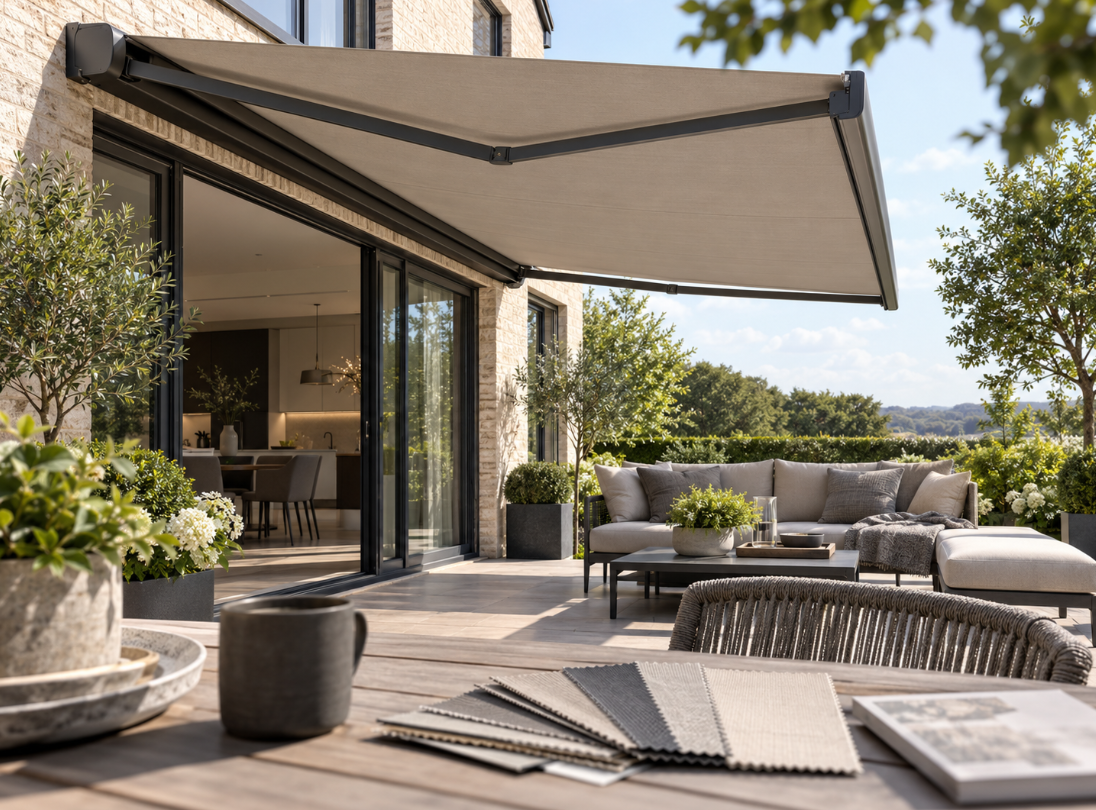
What Colour Awning Should I Choose? A Guide to Fabrics, Frames and Your Home
Once the size and mechanical type of a patio shading system have been settled, colour can easily feel like a straightforward final checkbox. In practice, however, the choice of fabric and cassette finish has a surprisingly large effect on how the finished installation looks against your property, both when fully extended and when neatly retracted. A well chosen palette makes the awning look like an integral piece of modern architecture, whereas a rushed choice can look like an afterthought bolted onto the exterior wall.
Selecting the right combination requires looking beyond simple personal preference and considering your brickwork, render, window frames, patio paving, and the quality of natural light around your home.
Does Awning Colour Really Matter?
Colour governs how prominent the shading system appears when closed and how it alters the visual balance of the back of the house when open. A dark charcoal cassette mounted against pale render creates an intentional, contemporary line, while a colour matched white or cream housing can practically disappear against pale stonework.
Beyond exterior aesthetics, the fabric itself acts as a large visual ceiling over your patio. It changes the atmosphere beneath the canopy, influences the quality of filtered light, and frames the view when looking out from your kitchen or living room. A premium bespoke awning should feel considered and harmonious, enhancing the overall architectural impression of your home rather than simply providing shade.
Should Your Awning Match Your House?
Homeowners often approach colour selection by asking if the awning should match their house. The most successful installations usually rely on coordination rather than an exact match. Trying to find a fabric that matches a weathered red brick or a specific shade of off-white render is rarely necessary, and a literal match can sometimes look flat.
Instead, look at the accent colours already present on your exterior. If your property features dark aluminium glazing, matching those tones with a graphite or textured grey frame creates an immediate sense of cohesion. The fabric can then either echo those dark tones for a dramatic, contemporary look or introduce a softer neutral to balance heavy glazing.
Choosing an Awning Colour for a Modern Home
Contemporary properties with large expanses of glass, bifold doors, sliding panels, and smooth render call for a restrained, architectural approach to colour. Minimalist extensions benefit from understated palettes that respect clean lines and geometric forms.
Charcoal, slate grey, deep taupe, and soft off-white fabrics are particularly popular for modern homes. These shades complement dark window frames and polished concrete or large-format porcelain patios. Choosing a matte or textured cassette finish in a similar dark tone helps the housing blend seamlessly with modern aluminium frames, ensuring the entire elevation looks unified and deliberate.
Choosing an Awning Colour for a Brick House
Traditional brick properties require a more nuanced eye, as the natural undertones in clay brickwork dictate what works best. Red brick, yellow London stock, and darker contemporary engineering bricks all interact differently with exterior fabrics.
For warm red brick, neutral tones like warm greys, sandy beiges, and muted taupes often soften the harshness of the masonry without clashing against the natural orange and brown flecks. If you prefer contrast, darker charcoal frames can ground a traditional brick elevation by introducing a sharp, modern edge that bridges the gap between old and new architecture.
What About Period Properties?
Victorian, Georgian, and Edwardian homes have a distinct character defined by timber sash windows, detailed brickwork, or historic stonework. When adding a retractable awning to a period property, the goal is usually to respect the existing architecture while introducing modern comfort.
Neutral, earthy tones like stone, ecru, and soft grey keep the focus on the historic fabric of the building. In some instances, subtle traditional stripes can work exceptionally well, echoing the heritage awnings seen on classic townhouses or boutique venues. The key is to select classic, muted tones that feel entirely at home against older masonry rather than jarringly contemporary finishes.
Light vs Dark Awning Fabrics
The debate between light and dark fabrics involves more than just personal taste. Each option creates a fundamentally different visual and atmospheric effect.
Light fabrics, such as creams, light greys, and pale sands, create a bright, airy feeling underneath the canopy. They reflect more ambient light, feel softer against traditional or lighter façades, and can make smaller patios feel more open. However, they also project more light through the weave.
Darker fabrics, including deep charcoal, forest green, or rich navy, make a much stronger architectural statement. They pair naturally with modern dark glazing, absorb more direct glare, and create a cozy, sheltered atmosphere beneath the canopy.
When considering thermal performance, remember that solar protection is governed by the specific technical specification, weave density, and manufacturing quality of the fabric rather than simply whether the colour appears dark or light.
How Does Awning Colour Affect the Light Underneath?
When your awning is extended, the fabric effectively becomes an overhead canopy that filters the natural daylight reaching your patio and windows. This means the colour of the fabric directly influences the mood and colour cast of the space below.
A warm beige or sand-toned fabric filters light into a warm, inviting glow that flatters outdoor furniture, natural wood, and skin tones. A cool grey or crisp white fabric creates a brighter, crisper daylight effect that feels modern and clean. Consider how you intend to use the space and whether you prefer a warm, Mediterranean-style atmosphere or a crisp, contemporary environment.
Think About the View From Inside Your Home
Many homeowners make their final colour decisions while standing in the garden looking up at a fabric sample swatch. It is equally important to step inside and consider what the awning will look like when viewed from your kitchen, dining table, or living room sofa.
When extended, the underside of the awning fabric occupies a significant portion of your immediate view through bifold or sliding doors. Choosing a colour that complements your interior flooring, kitchen finishes, and indoor furniture creates a seamless visual flow between your internal living spaces and the patio outside.
Should the Awning Frame Match Your Windows and Doors?
The cassette and arm assembly form the permanent hardware of your awning, visible even when the fabric is safely rolled away. Matching your awning frame to your window and door frames is one of the most reliable ways to achieve a high-end, custom look.
If your home features anthracite grey or black aluminium frames, specifying a matching textured cassette ensures the hardware looks like part of the original building specification. If your windows are white or cream, a matching lighter cassette keeps the installation understated and visually light against the wall.
Plain or Striped Awning Fabric?
The choice between a plain solid fabric and a traditional stripe comes down to personal taste and architectural style.
Plain fabrics offer a clean, contemporary aesthetic. They let the form of the architecture take centre stage and provide a timeless background that will not date as garden trends evolve.
Striped fabrics add personality, depth, and a touch of classic resort-style elegance. While they can look wonderfully authentic on certain period properties or terrace homes, modern subtle multi-tonal stripes can also add sophisticated texture to contemporary spaces without feeling old-fashioned.
Should Your Awning Match Your Garden Furniture?
Everything on your patio does not need to be the exact same shade. Attempting to match your awning fabric precisely to your sofa cushions, dining chairs, or parasol can look overly uniform and restrictive if you ever decide to update your garden furniture.
Instead, aim for a cohesive palette. Pick two or three base tones from your hard landscaping, paving slabs, and window frames, and use your awning to anchor that palette. Let your furniture and planters introduce accent colours that complement the broader scheme.
What Colours Hide Dirt Best?
Exterior shading systems are exposed to dust, tree pollen, bird droppings, and wind-driven rain. While you might be tempted to choose a colour specifically to hide environmental debris, fabric maintenance and quality matter more than colour choice alone.
Extremely pale fabrics can show water marks and organic debris more readily if left uncleaned, while very dark fabrics can occasionally highlight fine dust and pollen as they dry. High-grade modern outdoor fabrics feature specialized surface treatments that resist moisture and dirt, making routine cleaning straightforward regardless of whether you choose a light neutral or a dark charcoal.
Will Awning Fabric Fade?
UV exposure is a reality for any outdoor textile, but modern engineering has largely solved rapid fading. Premium awnings use advanced manufacturing processes where pigments are locked deep into the core of the synthetic fibres before the yarn is even spun, rather than simply dyeing the finished cloth.
Fade resistance depends heavily on the quality of the fabric weave, the dyeing method, regular light maintenance, and the aspect of your property. South-facing patios receive intense, prolonged sunlight and benefit most from premium, UV-stabilized acrylic textiles designed to maintain their depth of colour for years.
What Are the Most Timeless Awning Colours?
If you want an exterior feature that will look just as relevant a decade from now, neutral tones are your safest and most sophisticated option.
Shades such as warm grey, muted taupe, charcoal, cream, and soft off-white transcend seasonal interior design trends. They adapt easily if you decide to repaint your render, change your patio paving, or update your outdoor furniture later on, ensuring your investment remains versatile over time.
Should You Follow Current Colour Trends?
While contemporary design magazines and exterior showcases often highlight bold accent colours or striking patterns, an awning is a long-term architectural investment.
Current trends can provide great inspiration for textures and frame finishes, but your home’s permanent architecture, brickwork, and window frames should always take priority over fleeting fashion. Choose a colour you will be happy to look at every single day, regardless of changing design fads.
How to Choose Your Awning Colour With Confidence
-
Request physical fabric samples and hold them directly against your exterior walls in different lighting conditions.
-
Compare the fabric swatch outdoors in bright sunlight and under natural shade.
-
Check the colour against your window and door frames when the light changes throughout the day.
-
Look at the fabric from inside your home through your glass doors to assess the interior view.
-
Consider how both the extended fabric and the retracted cassette will look on your elevation.
-
Keep your existing patio paving, decking, and fixed landscaping in mind to ensure a balanced palette.
Bespoke Awning Design With Shade Space
Choosing the right awning colour is an important part of creating a seamless outdoor living space. With over 35 years of bespoke shading expertise, Shade Space provides premium retractable awning systems tailored precisely to your property, with an extensive collection of high-grade fabrics, frame colours, and architectural finishes.
To explore fabric samples and discuss the ideal shading solution for your home, get in touch with our team to arrange a consultation or site survey.