

Are Pergola Side Screens Worth It? Privacy, Wind and Weather Control Explained
Once you have selected your frame colour, decided on the exact dimensions and finalised the position of your louvre roof system, the finer details of the installation come into focus. Among these, pergola side screens often feel like an optional accessory. When you are looking at a sleek aluminium frame in a pristine showroom or a digital render, it is easy to assume that an open structure with an adjustable roof is all you need.
Yet on a practical patio in the UK, the environment changes by the hour. A sudden gust of wind across an exposed lawn, low-angle glare during an evening barbecue or overlooking windows from a neighbouring property can quickly alter how comfortable your outdoor space feels. This is where lateral protection comes into play. Deciding whether to add side screens to your pergola means looking closely at how your garden is laid out, where the prevailing weather comes from and how you intend to use the area across different seasons.
What Are Pergola Side Screens?
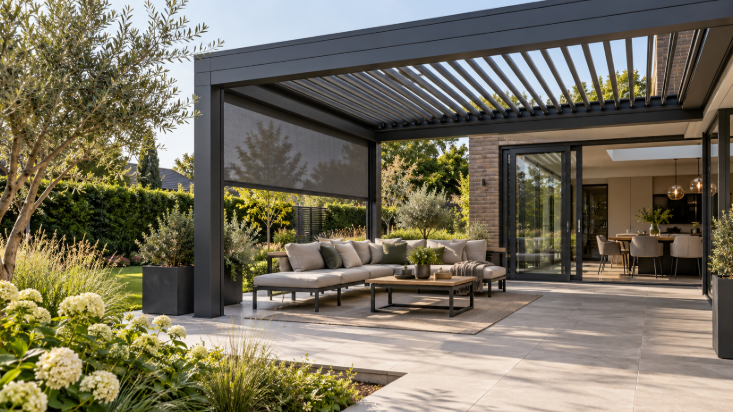
Modern pergola side screens are vertical shading solutions designed to integrate cleanly with high-end aluminium structures. Rather than traditional fabric blinds or heavy curtains, these systems usually feature a tensioned fabric housed neatly within an extruded aluminium cassette fitted beneath the pergola beam.
When retracted, the housing remains discreetly tucked away, preserving the clean architectural lines of the structure. When lowered, the fabric runs down vertical side channels that keep it secure, even when a breeze picks up. Depending on the manufacturer, these screens can be operated manually via a crank or integrated into a motorised system controlled by handheld transmitters or automated weather sensors.
What Do Side Screens Actually Do?
It helps to be clear about what side screens are designed to achieve. They do not turn an open aluminium pergola into a sealed conservatory, nor do they create a fully heated indoor room. Instead, their role is to modify the microclimate immediately beneath your structure.
Their primary functions include breaking up lateral wind flow, diffusing bright low-angle sunlight, providing visual screening from adjacent properties and taking the edge off driving rain. By softening these elements, they make the space usable for more months of the year, bridging the gap between an entirely open terrace and a permanent brick extension.
Are Pergola Side Screens Good for Wind?
One of the most common reasons homeowners consider side screens is to combat wind. An adjustable louvre roof does an excellent job of managing overhead conditions, but once the wind hits ground level, it flows horizontally straight underneath the pergola.
Side screens help by acting as a windbreak, slowing down the velocity of moving air and creating a calmer pocket of space underneath. However, they are not rigid walls. Their performance depends heavily on the quality of the tensioning system, the weight and weave of the fabric, and the structural integrity of the pergola itself.
It is also worth noting that you rarely need to enclose every elevation. Targeting the specific side that faces your garden’s prevailing wind direction is often far more effective than automatically shutting off the entire structure, allowing you to maintain airflow while keeping the worst of the gusts at bay.
Do Side Screens Give You More Privacy?
Privacy is often the deciding factor for urban and suburban gardens. Many modern properties feature patios that are overlooked by upper-floor windows, adjacent balconies or neighbouring gardens. Dining outdoors or relaxing with family can sometimes feel exposed.
Side screens offer a practical way to regain your personal space. By lowering a screen on the boundary-facing side of the pergola, you instantly block clear lines of sight without having to wait years for hedges to grow or resorting to permanent fencing.
The degree of privacy depends largely on the fabric you choose. Some materials offer a high level of visual screening from the outside while still allowing you to look out into your garden, striking a careful balance between seclusion and openness.
What About Low Evening Sun?
While a louvre roof excels at blocking high midday sun, it has limitations when the sun dips towards the horizon. If your patio faces west or south, late afternoon and early evening sunlight can stream horizontally beneath the roof, causing glare that makes outdoor dining or relaxing uncomfortable.
Adding a side screen to the sun-facing elevation provides an effective vertical barrier against low-angle glare. It softens the light into a pleasant, filtered glow, extending the hours during which you can comfortably use your patio without squinting across the table.
Do Side Screens Help With Rain?
British weather rarely falls straight down. When rain is accompanied by wind, it drives in from the side, quickly dampening furniture and making open patios unappealing.
While side screens cannot make a pergola waterproof, they significantly reduce the amount of lateral moisture entering the space. A closed screen catches driving rain and allows it to run down the exterior face, keeping the seating area underneath protected and dry during typical summer showers.
Will Screens Make a Pergola Feel Too Enclosed?
A common hesitation among homeowners is that adding screens will defeat the purpose of having a garden pergola in the first place, turning an airy, open structure into a dark box.
This is where the flexibility of retractable screens matters. Because they can be raised and lowered on demand, you do not commit to a permanent enclosure. On a calm, sunny afternoon, the screens can be rolled completely away into their cassettes so the terrace remains completely open to the garden. When the wind picks up or the evening temperature drops, you simply lower them as needed.
Do You Need Screens on Every Side?
Rarely. Every garden responds differently to sunlight, wind and neighbouring sightlines. A bespoke installation should always be tailored to your specific site.
For instance, one side of your pergola might abut the house wall or a high brick boundary, requiring no screening at all. Another side might enjoy an uninterrupted view across an open lawn that you definitely do not want to block. By assessing your property objectively, you can specify screens only where they genuinely solve a problem.
Side Screens on Wall-Mounted Pergolas
For wall-mounted pergolas, the house itself forms one natural boundary, meaning you are only looking at enclosing two or three open sides. These structures are frequently installed directly outside bifold or sliding doors, creating an extension of your indoor living space.
Adding a side screen to the exposed flank of a wall-mounted pergola can dramatically improve comfort right outside your kitchen or living room doors, shielding the threshold from crosswinds and creating a more defined, sheltered outdoor room.
Side Screens on Freestanding Pergolas
Freestanding pergolas sit further out in the garden, exposed to the elements on all four sides. While this creates a stunning architectural feature, it also means the structure catches wind and sun from every angle.
Side screens on a freestanding system offer modular control. You might choose to screen the side facing a neighbour while leaving the garden-facing elevation open, giving the structure a balanced, adaptable feel that works whether you are hosting dinner parties or relaxing by the lawn.
Side Screens and Outdoor Kitchens
Integrating an outdoor kitchen beneath a luxury pergola is increasingly popular, but cooking spaces require careful consideration regarding ventilation and comfort.
While side screens can protect the cook and the dining area from wind and low sun, you must maintain adequate airflow around cooking appliances. Completely enclosing a barbecue or pizza oven with tight fabric screens is neither practical nor safe. When planning screens for an outdoor kitchen area, precision placement is essential to ensure smoke clears easily while still providing shelter where people sit and eat.
Can Pergola Screens Be Motorised?
Modern premium screen systems are frequently available with advanced motorisation. Instead of manual cranks, tubular motors hidden within the cassette allow you to lower or raise the screens at the touch of a button.
Many systems can also be integrated into broader smart home automation setups or paired with wind and sun sensors. This means the screens can react automatically to changing weather conditions, lowering when the sun gets too bright or retracting if high winds are detected, protecting the fabric when you are away from home.
What Do Pergola Side Screens Look Like?
A poorly chosen screen can easily ruin the aesthetic of a high-end aluminium structure. Premium side screens are designed as an integrated component of the pergola system rather than an afterthought.
They feature extruded aluminium frames that match the powder-coated finish of the main structure, hiding fixings and mechanical parts from view. When selected in a complementary RAL colour, the screen cassettes and side tracks blend seamlessly into the columns and beams, maintaining a sleek, architectural finish.
Mesh, Fabric and Openness
The fabric used in pergola screens is typically a specialised technical mesh, such as fibreglass or PVC-coated polyester. These materials are engineered to withstand UV degradation, moisture and temperature fluctuations without sagging or fading.
Fabrics vary in their openness factor, which determines how much light passes through and how easily you can see through them. A tighter weave provides maximum privacy and glare reduction, while a more open weave preserves outward views of the garden while still breaking the wind.
Do Side Screens Make a Pergola Warmer?
Side screens do not generate heat, but they dramatically alter your thermal comfort. By eliminating wind chill, they make the air beneath the pergola feel significantly milder.
For extended evening use or cooler months in spring and autumn, combining side screens with discreet infrared heaters creates a comfortable, sheltered microclimate that lets you enjoy your patio long after the sun has gone down.
Are Pergola Side Screens Worth It in the UK?
Given the variable nature of the British climate, side screens are frequently what transforms a pergola from a purely summer-only feature into a practical space used from early spring through to late autumn.
They do not turn your patio into a winter living room, but they successfully remove the environmental annoyances—wind, glare, low sun and overlooking eyes—that otherwise drive people back indoors. For most homeowners with exposed gardens or privacy considerations, they represent a worthwhile investment that completes the functionality of the system.
When Are Pergola Side Screens Most Worthwhile?
-
Your patio suffers from persistent breezes or a strong prevailing wind.
-
Nearby properties or upper windows overlook your outdoor seating area.
-
Low afternoon or evening sun creates glare beneath the louvre roof.
-
You want to use your outdoor dining or lounge space during spring and autumn.
-
You prefer flexible shelter rather than permanent, heavy walls.
When Might You Not Need Them?
-
Your patio sits within a sheltered, walled courtyard naturally protected from wind.
-
Privacy is not a concern because your garden is completely secluded.
-
You prefer a completely open structure to preserve uninterrupted garden views.
-
You only use your pergola during calm, warm summer afternoons.
Add Screens During Installation or Later?
It is always wise to discuss side screens during the initial design phase of your pergola, even if you decide to install them at a later date. Ensuring that the structural framework, tracks and power supplies are accounted for from the start makes future retrofitting straightforward and avoids unsightly surface wiring or compatibility issues.
Choosing the Right Side Screens for Your Pergola
Selecting side screens comes down to evaluating your site exposure, privacy needs and daily habits. By carefully choosing which elevations require screening and selecting fabrics that match your aesthetic, you can create a tailored outdoor space that performs reliably in any weather.
Speak to Shade Space About Pergola Side Screens
Shade Space specialises in premium bespoke pergolas and louvre roof systems. With decades of expertise in architectural shading, our team can help you design a tailored structure complete with integrated side screens, precision lighting and heating solutions suited to your property.
To discuss your project or arrange a site survey, contact Shade Space today.