

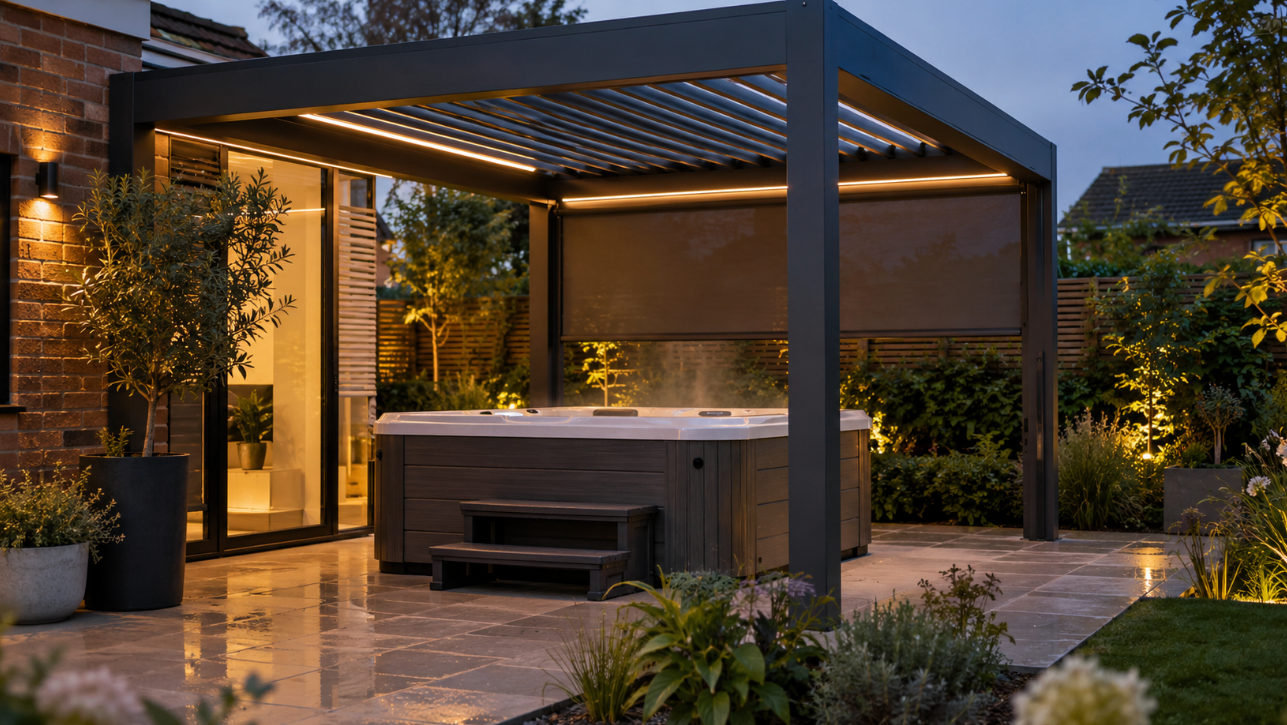
Can You Put a Hot Tub Under a Pergola? Privacy, Ventilation and Design Explained
Hot tubs are often positioned completely in the open. On a warm, calm summer evening, sitting under an open sky feels effortless, but British weather can quickly change how comfortable an outdoor spa experience is. Sudden rain showers, chilly winds, and overlooking windows from neighbouring properties often make homeowners look for ways to shelter their hot tubs.
Placing an overhead structure above warm water introduces practical design questions that do not apply to an ordinary patio or outdoor seating area. Introducing a roof above a bubbling spa involves managing warm moisture, maintaining proper ventilation, balancing privacy, and ensuring that access panels and service points remain easy to reach.
Can You Put a Hot Tub Under a Pergola?
Yes, a properly designed pergola can create an exceptional setting around a hot tub. Rather than leaving a spa exposed in the middle of a lawn or patio, an architectural pergola frames the space and gives it a sense of purpose. It provides a defined zone within the garden while offering adjustable shade during the day and a more intimate atmosphere in the evening.
However, placing a structure directly over a hot tub requires careful planning. The hot tub must remain fully usable, safe, and accessible. The surrounding space must not become overly enclosed or trap excessive moisture, which can degrade the comfort of the area and put unnecessary strain on materials. When designed thoughtfully, a pergola transforms a standalone spa into a seamless part of your outdoor living space.
Why a Louvre Roof Works Particularly Well Over a Hot Tub
Traditional solid roofs can trap rising steam and create a dark, damp environment over a hot tub. This is why adjustable louvre roof systems are exceptionally popular for spa areas.
A louvre roof features rotating aluminium blades that can be adjusted to any angle. When the hot tub is in use, opening or angling the louvres allows warm air and steam to dissipate naturally into the open air while still breaking the direct force of harsh sun or light drizzle. When closed completely, a well-designed louvre system provides reliable overhead weather protection. This flexibility means you do not have to choose between complete openness and total shelter.
It is important to remember that a louvre roof does not replace a standard insulated hot tub cover. The cover must still be used when the spa is idle to retain heat, maintain water chemistry, and ensure safety.
Ventilation Matters More Than People Expect
A hot tub releases substantial warm moisture into the surrounding air. In a completely open garden, that steam disperses instantly. Introduce an overhead roof, perimeter walls, or multiple side screens, and that moisture is contained.
Without proper ventilation, steam accumulates underneath the structure, leading to heavy condensation, damp odours, and an uncomfortably humid atmosphere for anyone in the spa. Maintaining airflow is essential. An adjustable louvre roof helps preserve the open-air character of the structure, ensuring that steam has a natural route to escape rather than building up beneath the ceiling.
What About Condensation Under the Louvre Roof?
When warm, humid air rising from a hot tub meets cooler aluminium overhead surfaces, condensation can form. This is a natural physical reaction rather than a sign of a leaking roof or product failure.
Condensation levels depend heavily on ambient outdoor temperatures, water temperature settings, how long the tub is left uncovered, and how open the roof louvres are positioned during use. Maintaining good air circulation around the structure is the most effective way to manage moisture. Angling the louvres slightly during spa sessions allows warm vapour to escape before it can settle heavily against the framework.
Should the Louvre Roof Stay Open While the Hot Tub Is Being Used?
There is no single rule for how the louvre blades should be positioned while you use your hot tub. The ideal setting depends on the weather, the outside temperature, and the degree of privacy or shelter you want at that moment.
On a mild evening, opening the louvres fully maintains the feeling of an open-air garden spa. During light rain, angling the blades allows you to enjoy the hot tub while keeping most precipitation out, provided there is enough lateral airflow. If the weather turns exceptionally cold or windy, adjusting the louvres to block the wind while keeping a small gap for ventilation strikes a practical balance.
Hot Tub Privacy and Pergola Side Screens
Privacy is frequently the primary motivation for installing a pergola over a hot tub. Many gardens suffer from overlooking windows, elevated balconies, or neighbours peering over boundary fences. Sitting in a hot tub in full view of nearby properties rarely feels relaxing.
Integrating custom pergola side screens provides an effective solution. Unlike permanent wooden fences or masonry walls, retractable glass or fabric screens can be lowered when you want privacy and raised when you want an open view of the garden. They block low-angle lines of sight from neighbouring properties without making the patio feel confined. You can explore our detailed guide on pergola side screens for further design insights.
Do You Need Side Screens on Every Side?
Enclosing all four sides of a hot tub pergola is rarely necessary and often counterproductive. A fully boxed-in structure restricts ventilation, traps steam, and turns your outdoor spa into an uncomfortably warm enclosure.
Instead, look at your garden layout objectively. One side may face a boundary fence where overlooking is an issue, making a screen appropriate. Another side might open onto a manicured lawn or a water feature that you want to keep in full view. The side closest to your back door should usually remain open for easy access. Strategic, selective screening delivers privacy where it is genuinely needed while keeping the overall structure airy and welcoming.
Wall-Mounted or Freestanding Pergola for a Hot Tub?
Choosing between a wall-mounted pergola and a freestanding design depends on where your hot tub sits in relation to your home.
A wall-mounted pergola attaches directly to the exterior wall of the house. This works exceptionally well if your hot tub is positioned immediately outside bifold doors, sliding glass panels, or a modern kitchen extension. It creates a seamless threshold between indoor living areas and the spa. You can read more about structural configurations in our article on wall-mounted vs freestanding pergolas.
Conversely, a freestanding pergola stands on its own four posts anywhere in the garden. This configuration suits homeowners who prefer to place their hot tub further down the garden, perhaps nestled among mature planting, near a garden room, or in a quiet, secluded corner away from the main back doors.
Where Should the Hot Tub Sit Under the Pergola?
Squeezing a hot tub tightly between the posts of an existing pergola creates practical difficulties. A hot tub requires more floor space than just its physical acrylic shell.
You need to account for stepping stones or slip-resistant paving around the perimeter, comfortable entry and exit points, space to remove and store the heavy insulated cover, and unobstructed clearance for maintenance technicians to reach the equipment bays. Positioning the spa slightly off-centre beneath a larger pergola often leaves practical room for towel hooks, ambient seating, or planted containers.
Don’t Block Maintenance Access
Hot tubs are complex mechanical systems housing pumps, heaters, control packs, and pipework. Periodic servicing and occasional repairs are inevitable over the lifespan of the spa.
When planning your pergola layout, ensure that side screens, built-in planters, decking, or permanent furniture do not block the access panels of the hot tub. A beautiful design loses its appeal if technicians have to dismantle part of the structure or uproot landscaping to replace a pump seal. Always consult the hot tub manufacturer guidelines for minimum service clearance zones before finalising your pergola design.
What About the Weight of the Hot Tub?
It is vital to separate the structural considerations of the hot tub from those of the pergola. A filled hot tub containing hundreds of litres of water and several adults weighs an immense amount.
The pergola posts carry the weight of the aluminium frame, louvres, and any integrated snow load or wind resistance, but they do not support the hot tub itself. The spa must sit on a suitably engineered, weight-bearing concrete pad or reinforced patio slab capable of handling concentrated loads without shifting or cracking over time.
Can You Put a Hot Tub and Pergola on an Existing Patio?
Many homeowners wonder if they can simply place a pergola and hot tub on top of an existing patio. The short answer is that the patio must be assessed thoroughly for both elements.
A patio that handles garden furniture and foot traffic perfectly may not possess the structural depth or load capacity required for a filled hot tub. Similarly, anchoring pergola posts securely into old or uneven paving requires professional assessment to ensure the fixings remain stable against wind uplift. For a deeper look at patio suitability, read our guide on installing a pergola on an existing patio.
Drainage Around a Hot Tub Pergola
Water management is an unavoidable consideration when combining a hot tub and an overhead structure. Hot tubs involve splashing, wet footsteps, occasional water changes, and runoff from the pergola roof itself.
Paving or decking around the spa must direct water away effectively to prevent standing puddles and slip hazards. A louvre roof manages rainfall by channeling water down internal drainage channels within the posts, keeping the seating area dry. You can learn more about how water is handled in our article on louvre roof pergola drainage. When emptying the hot tub for routine cleaning, follow local environmental guidelines and manufacturer instructions regarding discharge paths rather than letting chlorinated water flood flower beds.
Lighting Around a Hot Tub
Evening use is one of the greatest pleasures of owning a hot tub, making lighting an essential design consideration. Harsh overhead floodlights ruin the relaxing ambience, while pitch darkness makes moving around the garden hazardous.
Integrating subtle, dimmable LED lighting into the louvre blades or frame of the pergola creates a warm, sophisticated glow without glare. Electrical installations around water must be specified and installed by qualified professionals in strict accordance with UK electrical regulations and manufacturer safety requirements.
What About Pergola Heating Near a Hot Tub?
A hot tub provides intense warmth while you are immersed in the water, but stepping out into cold night air can be bracing.
While some homeowners install infrared heaters on their pergolas, their placement requires careful thought when positioned near a spa. Heaters should provide comfortable ambient warmth for drying off or relaxing on adjacent loungers without creating excessive heat directly over the hot tub water. Any heating system must be rated for outdoor use and installed in accordance with relevant electrical standards.
Can a Pergola Make a Hot Tub More Comfortable in Winter?
A well-designed pergola significantly enhances winter hot tub usage. Overhead shelter keeps off freezing drizzle, side screens block biting winds, and integrated lighting extends your evening sessions deep into the darker months.
However, a pergola does not heat the water, prevent the spa from freezing if left unpowered, or replace your insulated hot tub cover. It simply creates a more sheltered, comfortable microclimate around the appliance, making winter soaking far more appealing.
Think About the View From Inside the House
A hot tub is a prominent feature in any garden, and an architectural pergola adds substantial visual weight. If both sit directly outside your main kitchen window or bifold doors, they will dominate your outlook every day of the year.
Consider how the structure looks from inside your home. Aligning sightlines, choosing a frame colour that complements your exterior brickwork or render, and using thoughtful landscaping can ensure that the pergola and hot tub enhance your interior view rather than obstructing it.
Can You Add a Pergola Over an Existing Hot Tub?
Yes, a pergola can often be installed over an existing hot tub, but it requires precise site measurements.
The fixed position of the hot tub, its electrical supply conduit, and the surrounding paving will dictate where the pergola posts can be anchored. A professional site survey ensures that the structure can be erected safely without damaging the spa or restricting access panels.
Should You Plan the Hot Tub or Pergola First?
Whenever possible, plan both elements at the same time. Co-designing the hot tub location and the pergola ensures that foundations, electrical supplies, drainage routes, sightlines, and access clearances work together harmoniously from day one. If you already own the hot tub, a professional survey allows the pergola to be custom-fitted around your existing layout.
Common Mistakes When Putting a Hot Tub Under a Pergola
-
Making the structure excessively enclosed and trapping heavy steam.
-
Forgetting to allow adequate clearance for the hot tub cover to open fully.
-
Blocking equipment access panels with side screens or built-in furniture.
-
Ignoring the structural load requirements of a filled hot tub.
-
Leaving electrical planning until after the structure is installed.
Is a Pergola Over a Hot Tub Worth It?
Combining a hot tub with a premium pergola creates a sophisticated, highly functional outdoor spa retreat. It solves issues of privacy, weather exposure, and evening lighting while elevating the architectural appeal of your garden. The key to success lies in treating the space as an integrated environment where ventilation, access, and design work together.
Speak to Shade Space About a Pergola for Your Garden
Shade Space specialises in premium bespoke pergolas and louvre roof systems designed to enhance British outdoor living. With decades of shading expertise, our team helps homeowners design outdoor spaces that balance style, protection, and practicality. To discuss your garden project or arrange a professional site survey, explore our main pergola collection or contact our team.