

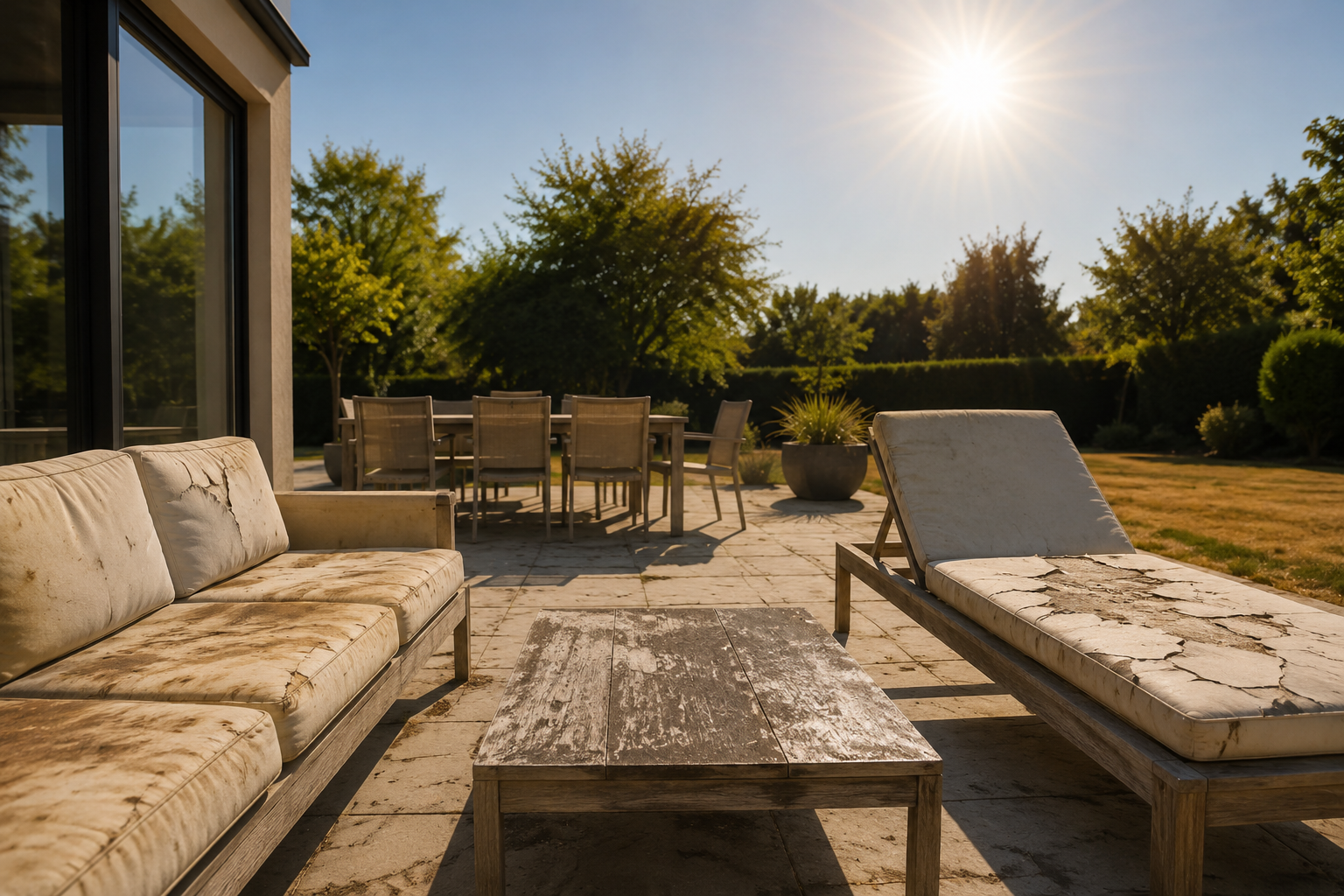
The Hidden Costs of an Unshaded Garden
A garden without proper shading can look perfectly fine on the surface, but underneath there are often hidden costs quietly building up. From UV damage and fading furniture to overheating and reduced usability, an unshaded outdoor space can end up costing far more than the price of the shading solution you never got round to installing. Here is what an unshaded garden could really be costing you, and how the right outdoor living solution can put a stop to it.
It is easy to think of garden shading as a nice to have rather than a necessity. A parasol here, a bit of shade from a tree there, and the space seems to get by well enough. But the reality is that sun, wind, and rain are working on every surface, fabric, and finish in that garden every single day, whether anyone is sitting outside or not. Over months and years, that constant exposure adds up to a set of costs that most homeowners and business owners never actually see itemised on a bill, yet still end up paying for.
1. UV Damage You Cannot Always See
Prolonged, unfiltered sun exposure does not just make a garden uncomfortable to sit in, it actively damages the things in it. UV rays break down fabrics, wood finishes, and plastics over time, causing materials to become brittle, discoloured, and weaker overall. This applies just as much to decking, fencing, and outdoor flooring as it does to furniture, meaning an unshaded garden can quietly age faster than a shaded one, even with the same level of care and maintenance.
The tricky part with UV damage is that it rarely shows up as a single dramatic event. Instead, it is a slow, cumulative process. A deck that looked rich and warm in its first summer can look grey and tired within two or three years of full sun exposure. Painted fencing can start to chalk and flake. Even plastic garden storage, bins, and planters can become brittle and prone to cracking after enough seasons in direct sunlight.
For homes and gardens that get a lot of direct sun, this is one of the most overlooked costs of skipping shade. It is not a single obvious expense, it is a slow decline that eventually shows up as a full replacement bill, often at a point where several things need attention at once rather than staggered over time. Introducing shade earlier, whether through a retractable awning or a pergola, slows this process considerably by reducing the total UV load that outdoor surfaces are exposed to across the year.
2. Fading Furniture And Fabrics
Garden furniture, cushions, parasols, and outdoor fabrics are a significant investment, and constant sun exposure is one of the fastest ways to age them. Colours fade, fabrics weaken, and cushions can become stiff or discoloured within a season or two of heavy summer sun. Darker colours are often hit hardest, visibly fading to a washed out version of their original shade, while lighter fabrics can develop a yellowed or dulled appearance.
It is not only the visible colour that suffers. UV exposure breaks down the fibres in outdoor fabric over time, meaning cushions and cushion covers can become weaker and more prone to tearing, even if the fading itself is not particularly noticeable. Rattan and synthetic wicker furniture can become brittle, and wooden furniture can dry out, crack, and warp without proper protection or a shaded position.
A properly positioned awning or pergola reduces direct UV exposure on furniture significantly, helping colours and materials last much longer. Over several years, this alone can offset a meaningful portion of the cost of a shading system, simply by protecting furniture that would otherwise need replacing sooner than expected. When you consider that a good outdoor sofa set or dining set can represent a genuinely large purchase, protecting that investment with shade is often far cheaper than replacing it every few years.
3. Overheating That Limits Comfort
Without shade, patios, terraces, and decking areas can become uncomfortably hot during peak sun hours, sometimes to the point of being unusable in the middle of the day. Surfaces such as stone paving, decking, and metal furniture can retain heat, making the space feel even hotter than the actual air temperature. Anyone who has sat down on a metal chair left in full sun for a few hours will know exactly how uncomfortable this can be.
This overheating effect also extends indoors. Rooms with large glazed doors or windows facing an unshaded garden or terrace can heat up significantly through solar gain, making the inside of the house warmer as well, not just the garden itself. This can lead to households relying more heavily on fans or air conditioning during warmer months, adding to energy costs that would otherwise be reduced by external shading.
This is not just a comfort issue at home, it has a direct commercial impact too. For pubs, cafes, restaurants, and hotels, overheated outdoor seating areas often sit empty during the sunniest parts of the day, right when footfall should be at its highest. Guests will often choose to sit inside in air conditioning rather than endure an exposed, overheated terrace, which defeats the purpose of having outdoor seating in the first place. A well designed shading system, whether that is a retractable awning, a Louvre Roof, or a fully enclosed glass room, keeps outdoor spaces at a genuinely comfortable temperature, rather than one that only works for a narrow window each day.
4. Reduced Usability Across The Year
Perhaps the biggest hidden cost of an unshaded garden is simply how little of the year it gets properly used. Without shade, a garden or terrace is often only comfortable during a handful of mild, sunny days, too hot at midday in summer and too exposed to wind and rain the rest of the year. In the UK climate in particular, that narrow window of usability can mean an expensive garden or terrace sits largely unused for most of the calendar year.
Think about how many potential days an outdoor space could realistically be used across spring, summer, and early autumn. Without any shading or weather protection, a large proportion of those days are either too hot around midday, too breezy in the evening, or interrupted by a sudden shower. Each one of these is a missed opportunity to actually use the space that has already been paid for, whether that is a garden, a patio, or a commercial terrace.
This is where the real value gap becomes clear. A shaded, weather adapted space, whether through Parasols and Umbrellas for lighter coverage or a fully retractable awning or pergola for year round protection, can be used far more consistently. For homeowners, that means more days actually spent enjoying the garden rather than looking at it through a window. For commercial venues, it means more trading days, more covers, and more revenue from the same physical space. A terrace that can only be used comfortably for around a third of the year is a very different asset to one that can be used for the majority of it, even though the physical space itself has not changed at all.
The Knock On Costs Businesses Often Miss
For commercial operators specifically, there are a few additional hidden costs worth calling out beyond furniture and fabric damage.
The first is lost covers during unpredictable weather. A sudden shower or an unexpectedly hot afternoon can mean guests either leave early or avoid outdoor seating altogether, even if the forecast earlier in the day looked promising. Without a shading system that can adapt quickly, venues are often left reacting to the weather rather than planning around it.
The second is staff and equipment costs tied to constantly moving furniture, parasols, and signage in and out depending on conditions. This is time that could otherwise be spent serving guests, and it also increases wear and tear on furniture that is regularly dragged in and out.
The third is the impact on booking confidence. Guests and event organisers are often hesitant to commit to outdoor bookings, whether that is a wedding, a corporate event, or a simple table reservation, if there is no reliable weather protection in place. A retractable awning, glass room, or Louvre Roof system removes much of that uncertainty, making outdoor space bookable with far more confidence throughout the year.
The Real Cost Comparison
When you add it up, the true cost of an unshaded garden is not zero, it is simply spread out and less visible. It shows up as:
- Furniture and fabrics that need replacing sooner
- Decking, fencing, and outdoor surfaces that fade and deteriorate faster
- Outdoor areas that sit unused during the hottest parts of the day
- Increased indoor cooling costs from solar gain through glazed doors and windows
- Commercial spaces that lose potential covers and bookings during peak sun hours and unpredictable weather
A well specified shading system, from a retractable awning to a fully enclosed glass room, is designed to prevent these costs from building up in the first place, while also extending how often and how comfortably the space can be used. In many cases, the cost of the shading system is recovered over time through reduced furniture replacement, reduced energy use, and, for commercial venues, additional trading days.
Getting The Right Shading Solution
Every garden and every commercial outdoor space is different, which is why shading should be specified around the space itself, not treated as a generic add on. Factors such as orientation, sun exposure through the day, wind exposure, and how the space is actually used all influence whether an awning, pergola, Louvre Roof, glass room, or parasol is the right fit.
A south facing terrace that gets strong sun for most of the day has very different shading needs to a smaller, partially shaded garden that mainly needs protection during a few peak hours. Similarly, a commercial venue that wants to keep outdoor seating open through autumn and winter is likely to need a fully enclosed solution, such as a glass room, rather than a lighter parasol or open pergola.
At Shade Space, each installation is designed around these specifics, drawing on more than 35 years of specialist experience across both residential gardens and large scale commercial projects. This includes everything from retractable fabric awnings and Louvre Roof pergolas through to fully glazed glass rooms and external venetian blinds, all tailored to the exact orientation, layout, and usage pattern of the space in question. This is also reflected in the company’s 4.9 star rating from 47+ Google Reviews and its recognition as BBSA Awards 2026 Winner for Best Large Scale Commercial Shading Installation, both strong indicators that the shading actually performs as intended once installed, rather than simply looking good on day one.
Protect Your Garden And Get More From It
An unshaded garden is rarely a deliberate choice, it is usually just something that has not been addressed yet. But the costs of UV damage, fading furniture, overheating, and reduced usability add up quietly over time, often outweighing the cost of a well chosen shading solution.
Whether the priority is protecting an existing investment in furniture and outdoor finishes, making a garden usable for more of the year, or turning a commercial terrace into a space that can trade confidently through more of the calendar, the right shading system pays for itself in ways that are easy to overlook until you actually add them up.
Get in touch to book a survey or request a quote, and find out which shading solution, from awnings and pergolas to glass rooms and Louvre Roofs, is the right fit for your space.