

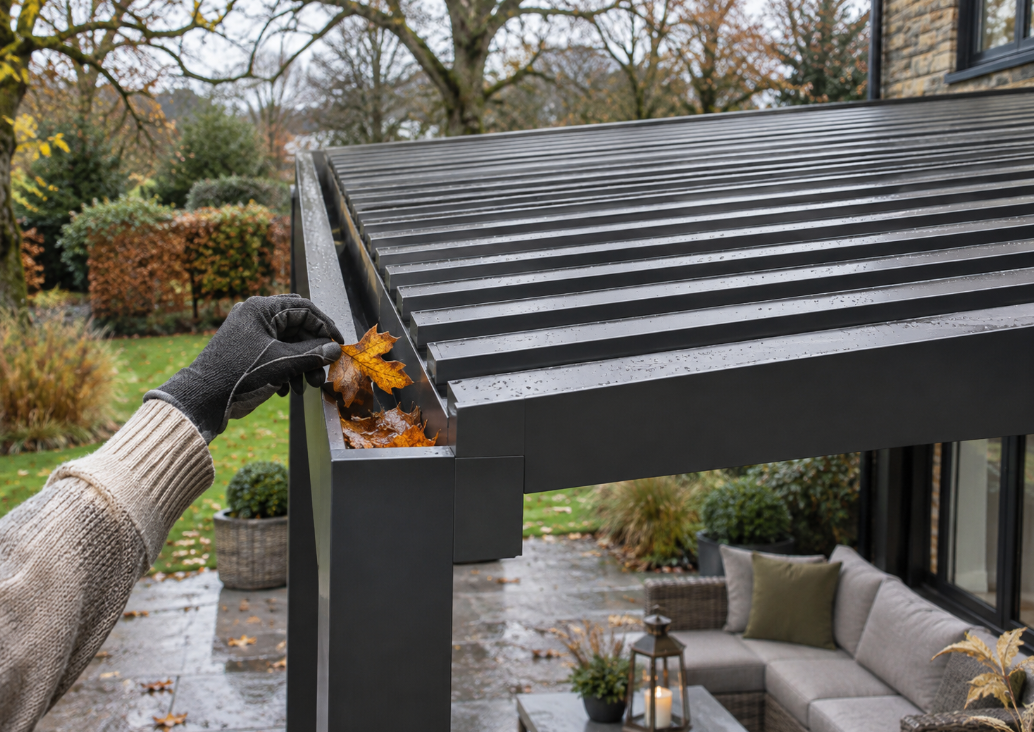
How to Prepare a Louvre Roof Pergola for Winter: Cleaning, Maintenance and What to Check
As November settles across the UK, the garden shifts gear. The bright, lazy afternoons of summer are gone, replaced by crisp mornings, damp air and the steady accumulation of autumn leaves across the lawn. For many homeowners, this is the time when outdoor living spaces are quietly put to bed for the season.
Yet a premium aluminium louvre roof pergola is not a piece of seasonal furniture that gets packed away into the shed. It is a permanent architectural feature designed to anchor your outdoor space 365 days a year.
However, transitioning from the heavy use of summer and autumn into the depths of winter requires a measured approach. Premium aluminium structures are engineered to be low maintenance, but low maintenance does not mean no maintenance. Autumn is the ideal window to give your louvre roof pergola a thorough check, clear away seasonal debris and ensure the drainage channels are fully functional before the heavier winter storms arrive.
The objective here is not to shut the structure down, but to ensure it is clean, clear and ready to handle whatever the British winter brings.
Do Louvre Roof Pergolas Need Maintenance?
Yes, but a high-end architectural shading system should not demand an intensive regime. Unlike traditional timber structures that require regular sanding, staining, and weather-proofing, powder-coated aluminium is inherently durable, resistant to rust and built to withstand the elements.
Routine care typically involves:
- Periodic visual inspections of the frame, fixings and moving parts.
- Keeping integrated drainage channels clear of organic matter.
- Gentle cleaning of the louvre blades and powder-coated frame.
- Ensuring motorised controls and accessories operate smoothly.
It is important to distinguish between basic homeowner care and professional servicing. Simple visual checks, clearing loose leaves and wiping down accessible surfaces can easily be handled as part of routine garden upkeep. More complex components, such as electronic motors, internal drive mechanisms or structural realignments, are best left to trained technicians.
Why Autumn Is an Important Time to Check Your Pergola
Autumn introduces a specific combination of environmental pressures. As deciduous trees shed their canopy, leaves, seed pods, twigs and organic dust drift across your garden. When mixed with persistent autumn rain and falling temperatures, this organic matter creates a wet layer that clings to surfaces and collects in corners.
If your pergola is positioned beneath mature trees, it will naturally demand more attention during October and November than one situated on an open, exposed urban terrace. Left unchecked, decomposing leaves can stain powder-coated finishes and, more critically, restrict vital water management pathways.
Start With Leaves and Loose Debris
Begin your seasonal review by looking at the roof and upper framework. Over the course of autumn, leaves naturally accumulate across the top of closed louvres and around the perimeter frame.
Use a soft-bristled brush or a leaf blower on a low, gentle setting to clear away loose leaves and twigs. Removing this surface debris prevents it from migrating further into the internal guttering system during the next downpour.
Important safety note: Never attempt to climb onto your pergola roof or stand directly on the louvre blades. Aluminium profiles and rotating blades are engineered to bear distributed weight loads like snow or rain, but they are not designed to support the concentrated weight of a person. Any work at height should be approached safely from ground level or via stable, properly positioned access equipment.
Why Louvre Roof Gutters Matter So Much in Winter
Modern architectural pergolas manage rainwater through an integrated drainage network. When the louvres are closed, rainfall is caught by the blades and directed smoothly into concealed perimeter gutters, which then channel the water down through the hollow support posts and out at ground level.
As highlighted in Shade Space’s guide to louvre roof pergola drainage, this invisible engineering is what keeps the space beneath dry and comfortable. However, if those internal gutters become choked with wet leaves, moss or wind-blown debris, water cannot move away efficiently.
During winter, blocked gutters can lead to localized overflow, pooling water or premature dampness around the perimeter of the structure. Keeping these hidden pathways clear is the single most important maintenance task you can perform before freezing temperatures arrive.
How Do You Know If Pergola Drainage Needs Attention?
Most of the time, a louvre roof drainage system works silently in the background. However, your pergola will often display subtle signs if something requires attention:
- Water draining noticeably more slowly from the base of the posts during heavy rain.
- Overflow spilling over the edge of the perimeter gutter rather than routing down the posts.
- Visible accumulation of leaves sitting in the corner mitres of the frame.
- Pooling water around the baseplates of the pergola posts.
If you notice unusual water behaviour, it is wise to inspect accessible gutter ends and clear any blockages carefully. If the restriction is deep within the internal downpipes or underground connections, professional intervention may be required.
Should You Clean the Louvre Blades?
Yes, periodic cleaning helps preserve the aesthetic appeal of your powder-coated aluminium and removes environmental pollutants, bird droppings and organic grime that accumulate over the active months.
When cleaning the louvre blades:
- Choose an overcast day when the metal surfaces are cool.
- Use lukewarm water mixed with a mild, pH-neutral household detergent.
- Apply the solution with a soft sponge, microfibre cloth or a soft-bristled extension brush.
- Rinse thoroughly with clean water from a standard garden hose.
Do not use abrasive scouring pads, steel wool or harsh chemical solvents, as these can permanently scratch or degrade the architectural powder-coated finish. Similarly, avoid aggressive pressure washing, which can force water past seals or damage sensitive electronic components.
What About the Aluminium Frame?
The vertical posts and horizontal lintels require the same gentle approach as the roof. In urban or coastal environments, airborne pollution, salt spray and general atmospheric grime settle on the powder coating. A seasonal wash-down removes these deposits, keeping the frame looking crisp and preventing stubborn organic staining over the damp winter months.
Check the Roof Operation
Before the arrival of frosty mornings, cycle the louvre roof through its full range of motion. Pay close attention to how the system sounds and moves.
Potential warning signs include:
- Unusual grinding, squeaking or clicking noises from the drive mechanisms.
- Jerky or uneven movement along the blade pivots.
- The roof failing to close or open into its fully sealed or horizontal resting positions.
Do not attempt to dismantle the motor housing, force jammed blades or adjust internal linkages yourself. If the operation feels compromised, arrange for a professional service visit to diagnose the fault safely.
Should You Lubricate the Louvre Mechanism?
Many homeowners assume that moving parts always need regular oiling or greasing. With modern architectural pergolas, this is not always the case.
Lubrication requirements vary significantly depending on the specific engineering of the manufacturer. Applying generic household oils or lubricants to tracks or pivot points can sometimes be counterproductive, creating a sticky residue that attracts airborne dust, pollen and winter grit, ultimately causing more friction rather than less.
Always consult your manufacturer’s specific aftercare guidelines. If moving parts require specialist lubrication, it is usually best handled during a scheduled professional service.
Check Side Screens Before Winter
If your pergola is fitted with motorized or manual drop-down side screens, autumn is the time to inspect them. As noted in Shade Space’s review of pergola side screens, these additions provide invaluable shelter against crosswinds and horizontal winter rain.
Check the screen fabric for signs of wear, ensure the side retention zips or tracks are free of trapped leaves, and operate the screen fully to confirm smooth deployment. Always ensure fabric screens are fully dry before leaving them retracted for extended periods to prevent dampness and mildew.
What About Integrated Lighting and Heating?
Colder evenings mean greater reliance on integrated LED lighting strips and radiant overhead heaters. Take a few moments to test all lighting zones and heating elements before winter sets in.
Look for any obvious external damage to light lenses, cabling or heater housings. Never attempt to open electrical enclosures, rewire connections or service heating elements yourself. Any electrical maintenance must be carried out by a qualified professional to ensure safety and preserve warranties.
Inspect the Area Around the Pergola Posts
Water management does not stop at the base of the structure. Once rainwater exits the drainage outlets in the pergola posts, it needs somewhere to go.
Walk around the perimeter and inspect the ground immediately surrounding each post base. Ensure that fallen leaves, mulch or garden soil have not built up over the drainage outlets. Clearing local patio drains and ensuring surface water can flow away freely prevents pooling around the footings. For more details on structural integration, see Shade Space’s guide on installing a louvre roof pergola on an existing patio.
What About Condensation in Cold Weather?
As external temperatures drop, you may occasionally notice water droplets forming on the underside of your aluminium louvres. This is often mistaken for a roof leak, but it is actually condensation.
Because aluminium is a conductive metal, warm, humid air rising from beneath or moisture-laden winter air can condense when it hits cold metal surfaces. This is a natural physical characteristic of metal roof structures, particularly during humid autumn mornings or sudden temperature shifts, and does not indicate a fault in the system.
Should Louvre Blades Be Left Open or Closed During Winter?
There is no universal rule that applies to every manufacturer or model. Some systems perform best when left slightly ajar to encourage airflow and reduce wind uplift pressure, while others are designed to be fully closed to create a weather-tight overhead shield.
Always follow the specific manufacturer guidelines for your pergola model. If high winds, heavy frost or snow are forecasted, adhere strictly to the recommended operating position to prevent mechanical strain.
What About Frost and Snow?
While heavy snowfall is relatively infrequent across much of the UK, severe frosts and occasional snow flurries do occur.
Never force an electronic roof mechanism if the louvre blades have frozen together overnight. Attempting to operate iced-up actuators can burn out motors or distort drive pins. Allow frost to thaw naturally, and consult your manufacturer documentation regarding recommended snow load limits and winter positioning.
When Is Professional Pergola Servicing Worthwhile?
While DIY cleaning and debris removal go a long way, scheduling professional aftercare can provide peace of mind, particularly for larger commercial installations or well-used residential structures.
As outlined on the Shade Space awning and pergola maintenance page, professional servicing typically encompasses:
- Comprehensive seasonal safety and structural inspections.
- Detailed cleaning of hard-to-reach frame and gutter areas.
- Mechanical alignment checks and tension testing.
- Professional inspection of motors, drives, lighting and automation systems.
Bringing in an expert ensures that minor wear and tear is caught early, protecting your investment for the long term.
Can Regular Maintenance Help a Pergola Last Longer?
A premium aluminium pergola is built to exceptional standards, with lifespans stretching across decades. As discussed in Shade Space’s analysis of how long aluminium pergolas last, the underlying metal is virtually impervious to rot and structural decay.
However, keeping drainage routes unobstructed and moving parts clean ensures that the mechanical and water-management systems perform flawlessly year after year. Maintenance is not about fighting inevitable decay; it is about preserving pristine operation.
A Simple Pre-Winter Pergola Check
- Remove obvious leaves and loose debris from the roof surface using a soft brush.
- Check that perimeter gutters and post drainage outlets are clear of blockages.
- Wash accessible frame and louvre surfaces with mild soapy water and a soft cloth.
- Cycle the roof mechanism and side screens to verify smooth, quiet operation.
- Test integrated lighting and heating controls before the colder evenings set in.
Never climb onto the roof or attempt to dismantle electrical or mechanical components.
What You Should NOT Do
- Do not stand or walk on the louvre blades.
- Do not force a roof mechanism that is frozen, jammed or obstructed.
- Do not attempt to open motor casings or tamper with electrical wiring.
- Do not use abrasive scouring pads, harsh chemical solvents or high-pressure washers.
- Do not ignore persistent drainage overflows or unusual mechanical noises.
Autumn Maintenance Does Not Need to Be Complicated
Preparing your louvre roof pergola for winter should not feel like an arduous chore. By taking a calm, methodical approach to seasonal cleaning, keeping a close eye on drainage and checking that all automated functions run smoothly, you can protect your investment against the elements.
A little sensible attention now ensures your outdoor space remains a clean, welcoming and reliable extension of your home, whatever the British winter brings.
Pergola Maintenance and Servicing From Shade Space
With over 35 years of bespoke shading expertise, Shade Space designs and installs premium architectural pergolas tailored to demanding British conditions.
If you would like professional assistance with seasonal servicing, require a thorough structural inspection, or want expert advice on preparing your shading system for winter, our specialist aftercare team is here to help.
Get in touch with Shade Space today to discuss your pergola maintenance requirements