

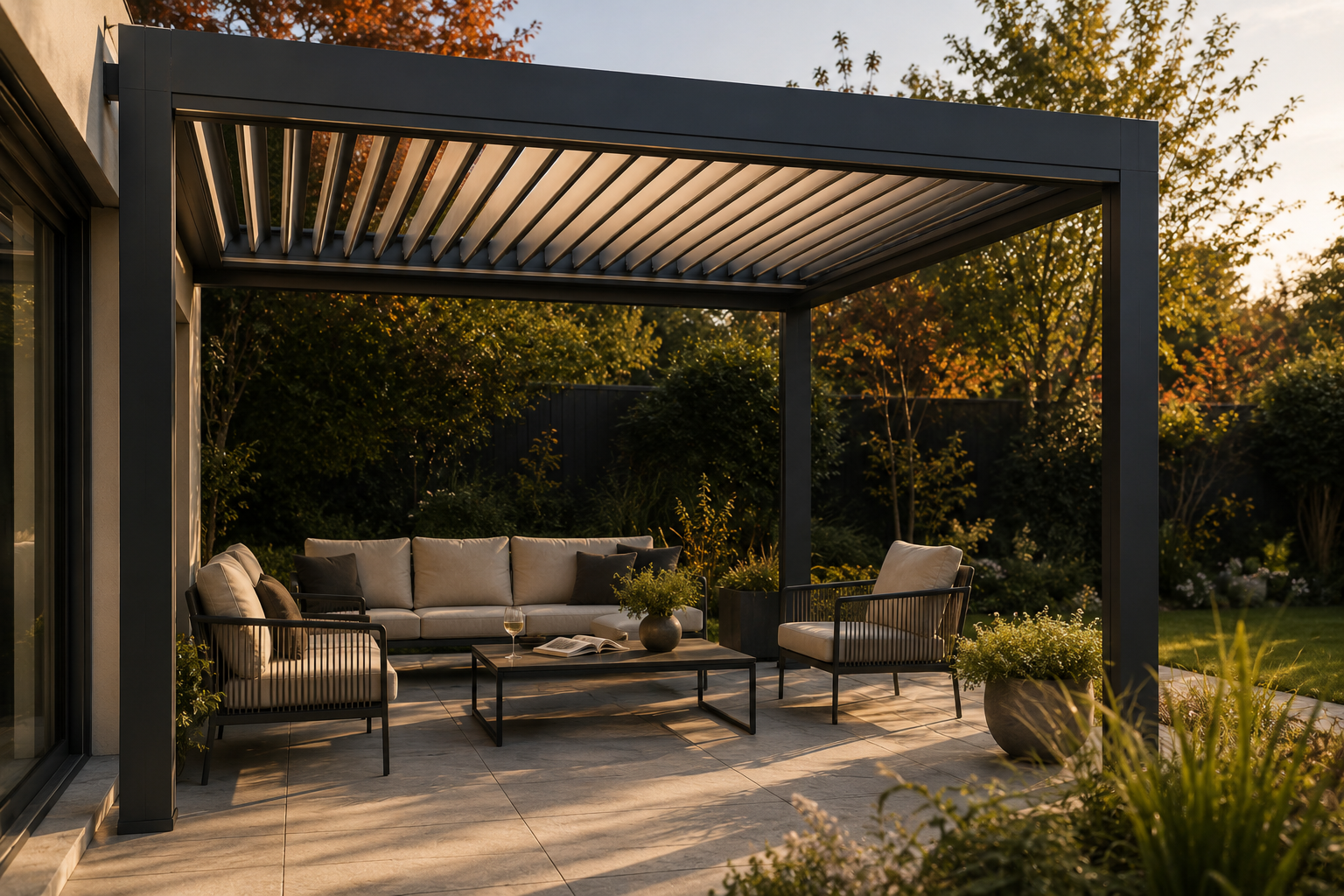
How Long Do Aluminium Pergolas Last?
If you are considering investing several thousand pounds into a pergola for your garden or terrace, it is entirely reasonable to want a clear answer to one central question: how long can you realistically expect it to last? It is the sort of question that deserves more than a single number pulled from a marketing brochure, because the honest answer depends on a range of factors that go well beyond the material alone.
Aluminium has become the material of choice for a growing number of UK homeowners investing in pergolas, and it is not difficult to understand why. It combines a clean, contemporary appearance with genuine structural strength, and it does so without demanding the ongoing upkeep that timber structures typically require. Yet the phrase aluminium pergola covers an enormous range of products, from mass produced kits sold through general retailers to bespoke, engineered systems designed and installed by specialists. The quality of the raw aluminium, the standard of the powder coating, the precision of the engineering, the competence of the installation, and the environment the pergola sits in will all shape how long it genuinely lasts, far more than the material specification on its own.
Rather than offering a single arbitrary figure and leaving it there, this article sets out to explain what actually determines the lifespan of an aluminium pergola. We will look at how the structural frame, the finish, the moving parts and any motorised components each behave differently over time, why aluminium performs so well against the demands of the British climate, how it compares with timber, and what genuinely separates a premium, long lasting installation from a pergola that starts to show its age within a few short years. By the end, you should have a clear and realistic understanding of what to expect from a well specified aluminium pergola, and what questions to ask before you invest in one.
How Long Does An Aluminium Pergola Last?
A well designed, professionally installed aluminium pergola from a reputable manufacturer can reasonably be expected to serve a household for decades, provided it has been specified correctly for its environment and looked after with a sensible level of ongoing care. That said, it is worth resisting the temptation to think of a pergola as a single object with one uniform lifespan, because it is really a collection of different components, each of which behaves differently over time.
The structural aluminium framework itself is the most durable element of the system. Aluminium does not rot, does not suffer from the moisture related decay that affects timber, and is inherently resistant to the type of corrosion that shortens the life of many steel structures. Assuming it has been correctly engineered and installed, the frame is typically the part of the pergola that will remain sound for the longest period, often outlasting many of the other components fitted to it.
The powder coated finish applied to the aluminium is a separate consideration. This finish is what protects the metal beneath it and gives the pergola its colour and appearance, and its longevity depends heavily on the quality of the coating process and the conditions the pergola is exposed to. A high quality powder coating, correctly applied, can maintain its appearance and protective qualities for a very long time, though continuous exposure to strong UV light, coastal salt air, or airborne pollution can gradually affect any coated surface over the years, regardless of how well it was originally applied.
Moving parts, such as louvres on a louvre roof system, hinges, tracks and retractable mechanisms, are subject to more physical wear than the static frame, simply because they are designed to move repeatedly throughout their working life. With regular use and sensible maintenance, these components can perform reliably for many years, but they are realistically more likely to need adjustment, servicing or eventual replacement before the underlying aluminium structure does.
Motors and automation systems sit at a different point on this scale again. Electrical and mechanical components inevitably have a different service life to structural aluminium, and while quality motors from established manufacturers are built for durability and typically come with meaningful warranties, they should be understood as serviceable, replaceable parts of the system rather than permanent fixtures in the same way the frame is.
Where a pergola includes retractable fabric canopies, the fabric itself will generally need replacing well before the aluminium structure does, since woven fabrics are inherently more vulnerable to UV degradation and weathering than metal or glass. Similarly, integrated lighting and accessories have their own typical service lives and may be upgraded or replaced over time as technology moves on, without this reflecting any issue with the pergola structure itself.
None of this should be read as a guarantee of a specific number of years, since so much depends on the individual product, its installation and how it is used and cared for. What it does illustrate is that thinking in terms of a single lifespan figure is less useful than understanding that a well built aluminium pergola is a system of parts, several of which are genuinely built to last for decades, supported by a smaller number of components that are designed to be serviced or renewed along the way.
Why Is Aluminium Such A Durable Material For Pergolas?
Aluminium’s popularity for outdoor structures is rooted in a set of genuinely useful physical properties. Unlike ferrous metals, aluminium naturally forms a thin oxide layer on its surface when exposed to air, and this layer acts as a barrier that protects the metal beneath from further oxidation. This is fundamentally different from the way rust behaves on iron or steel, and it is one of the key reasons aluminium performs so well in exterior applications where moisture exposure is a constant reality.
Aluminium also offers an excellent strength to weight ratio, meaning it is possible to engineer strong, stable structures without the sheer bulk and weight associated with steel. This matters for pergolas because it allows for slimmer sightlines and more elegant proportions, without compromising on the structural integrity needed to support a roof system, withstand wind loading, or carry the additional weight of motors, louvres and accessories.
The material is also dimensionally stable, meaning it does not expand, contract, warp or twist to anywhere near the same degree that timber does in response to changes in temperature and humidity. This stability is particularly valuable in a pergola context, where moving parts, sliding louvres or retractable roof systems rely on components remaining properly aligned over years of use. A structure that shifts and moves with the seasons is far more likely to develop the sort of misalignment issues that lead to premature wear.
Combine these properties with genuinely low ongoing maintenance requirements, and it becomes clear why aluminium is particularly well suited to permanent outdoor living structures in a climate like the UK’s, where a material needs to cope with sustained damp, periods of intense summer sun, and everything in between, often within the same week.
How Does An Aluminium Pergola Compare With Timber?
Timber remains a popular choice for pergolas, and it has genuine merits, particularly in terms of natural warmth and character. However, a fair comparison between aluminium and timber needs to look honestly at how each material behaves over the years, rather than simply at how each looks on day one.
Timber is naturally susceptible to moisture related issues, including rot, particularly in joints, end grain and areas where water can collect or fail to drain away properly. Even treated timber requires ongoing maintenance, typically including regular staining, painting or oiling, to maintain both its appearance and its resistance to the elements. Skipping this maintenance does not simply affect appearance, it can meaningfully shorten the structural life of the timber itself. Timber is also prone to warping, cracking and splitting as it responds to changes in moisture content and temperature, which can affect both the appearance of the structure and, in some cases, the performance of moving components attached to it.
Aluminium sidesteps most of these issues entirely. There is no staining or painting required to maintain the finish, no risk of rot, and none of the warping or splitting associated with organic materials responding to a damp climate. The trade off is that aluminium does not offer the same natural, organic character that many people associate with timber, and some homeowners will always prefer that traditional aesthetic, particularly for period properties or gardens with a more rustic design language.
For homeowners who value a genuinely low maintenance structure, a contemporary architectural appearance, and long term dimensional stability, particularly where the pergola incorporates moving louvres, motors or automation, aluminium is generally the more practical choice. For those who specifically want the natural texture and warmth of wood and are prepared to commit to the ongoing maintenance that timber requires to look its best, a well built timber structure can still be a valid option. The right material genuinely depends on priorities around appearance, maintenance and how the structure will be used, rather than one material being straightforwardly superior to the other in every respect.
Does Powder Coating Affect The Lifespan Of An Aluminium Pergola?
Powder coating is a finishing process in which a dry powder is electrostatically applied to the aluminium and then cured under heat, forming a durable, even layer bonded to the surface of the metal. It is the industry standard finish for quality aluminium outdoor structures, chosen because it offers a considerably tougher, more consistent and longer lasting finish than traditional wet paint.
A properly applied, quality powder coating does more than simply provide colour. It acts as an additional protective layer over the aluminium, helping to guard against surface damage, reduce the visual impact of general weathering, and maintain a consistent appearance over many years. This is one of the areas where the difference between a budget pergola and a premium one becomes genuinely apparent, since the quality of the powder coating process, including surface preparation, coating thickness and curing, can vary considerably between manufacturers.
Several factors can affect how well a powder coated finish holds up over time. Prolonged UV exposure can gradually affect the vibrancy of certain colours, particularly darker shades, over many years of direct sun. Coastal environments introduce airborne salt, which can be more demanding on any exterior finish, aluminium included, and general urban pollution can contribute to surface grime that, if left uncleaned for extended periods, may affect the long term appearance of the coating. Aggressive or inappropriate cleaning products can also damage a powder coated finish, which is why manufacturers typically recommend straightforward cleaning methods using mild solutions rather than harsh chemicals or abrasive tools. Physical damage, such as impacts during installation or subsequent use, can also compromise the coating locally, potentially exposing the aluminium beneath if not addressed.
This is precisely why the quality of the original finish matters so much when comparing pergola systems that might otherwise look similar in a showroom or brochure photograph. A thin, poorly applied coating on lower grade aluminium will simply not perform in the same way as a properly specified, professionally applied finish over aluminium of genuine structural quality, even though the two products may appear broadly comparable at the point of purchase.
Can Aluminium Pergolas Withstand The UK Weather?
The UK climate presents a genuinely demanding set of conditions for any outdoor structure. Homeowners are asking a pergola to cope with regular rainfall throughout the year, periods of strong wind, sustained UV exposure during summer months, significant temperature fluctuations between seasons, and occasional frost and even snow loading during winter. A structure that performs well in one of these conditions but not another is not, in any meaningful sense, suited to the British climate.
Aluminium’s inherent resistance to moisture and corrosion gives it a genuine advantage when it comes to rain and general dampness, and its dimensional stability helps it cope with the kind of temperature swings the UK regularly experiences without the movement associated with organic materials. However, it is important to be clear that the aluminium itself is only part of the picture. How well a pergola performs against wind loading, for example, depends as much on the quality of its engineering, the strength of its fixings and foundations, and the standard of its installation as it does on the properties of the aluminium used in its frame. A well engineered structure, properly anchored and installed by an experienced team, will perform considerably better in demanding weather than a poorly installed structure made from identical materials.
For louvre roof systems specifically, managing rainwater is a genuine engineering challenge rather than a simple matter of the louvres closing. Quality systems are designed with proper drainage channels built into the frame, directing water away from the structure through gutters and downpipes rather than allowing it to pool or run uncontrolled off the edges of the roof. The precision with which the louvres seal against one another when closed, and how effectively the drainage system channels the resulting water, has a direct bearing on how well the structure copes with sustained or heavy rainfall.
It would be inaccurate, and unhelpful, to claim that any pergola is entirely weatherproof in every conceivable condition. What can genuinely be said is that a well engineered aluminium pergola, correctly installed and properly specified for its location, is capable of performing reliably across the full range of conditions the UK climate typically presents, provided the quality of the underlying engineering and installation matches the quality of the material itself.
Do Aluminium Pergolas Rust?
This is one of the most common questions homeowners ask, and it is worth answering directly. Aluminium does not rust in the way that iron or steel does. Rust is specifically the reddish oxide that forms when iron reacts with oxygen and moisture, and aluminium simply does not undergo this particular chemical process, since it does not contain iron.
However, this does not mean aluminium is entirely immune to every form of environmental degradation. Aluminium can experience its own form of corrosion under certain conditions, typically appearing as a dulling or light pitting of the surface rather than the flaking, reddish rust associated with steel. This is generally a slower and less structurally significant process than steel corrosion, but it can still occur, particularly where the protective powder coating has been damaged, exposing bare aluminium to sustained moisture, salt air or pollutants.
This is exactly why the quality of the powder coating and the standard of manufacturing matter so much. A properly coated, well manufactured aluminium pergola offers strong long term protection against this kind of corrosion, while a poorly finished or lower grade product is inherently more vulnerable. Correct installation, sensible maintenance and prompt attention to any damage to the coating all play a meaningful role in keeping the structure protected over the years.
How Much Maintenance Does An Aluminium Pergola Need?
One of the genuine advantages of aluminium as a material is that it does not demand the kind of intensive, ongoing maintenance that timber structures require. There is no staining, painting or oiling needed to protect the frame, and the material itself does not need treating to prevent rot or insect damage, since these are simply not risks that apply to aluminium in the way they do to wood.
That said, low maintenance should not be confused with no maintenance at all. Keeping the frame clean using mild, non abrasive cleaning products helps preserve the appearance and integrity of the powder coated finish over the years, particularly in urban or coastal locations where surface grime or salt deposits can accumulate more quickly. Drainage channels, particularly on louvre roof systems, benefit from occasional checking to ensure leaves, debris or dirt are not obstructing the flow of water, since blocked drainage can lead to pooling that places unnecessary strain on the structure and its seals. Moving components, whether hinges, tracks or louvres, should be kept clear of debris and checked periodically to ensure they continue to operate smoothly, and manufacturers will typically provide sensible guidance on how often this should be done.
For motorised louvre roofs or retractable systems, the mechanical and electrical elements generally warrant more attention than the aluminium frame itself. Motors, control systems and any automated weather sensors are, by their nature, more complex than a static structural frame, and following the manufacturer’s recommended servicing schedule helps ensure these components continue to perform reliably. This is a sensible and manageable level of care rather than anything approaching the intensive maintenance regime associated with timber, and for most homeowners it amounts to little more than periodic cleaning and the occasional check, rather than a demanding ongoing commitment.
What Can Shorten The Lifespan Of An Aluminium Pergola?
It is worth being clear that the phrase aluminium pergola describes a material, not a guarantee of quality, and a number of factors beyond the aluminium itself can significantly shorten how long a structure genuinely lasts. Poor quality aluminium, thinner or lower grade than is appropriate for the intended structure, will simply not perform as well over time as properly specified material, regardless of how similar it may look at the point of sale.
Poor engineering and design can undermine even good quality materials, particularly where a structure has not been properly calculated to cope with realistic wind loading or the additional weight of accessories such as heating, lighting or side screens. Incorrect installation is one of the most common and preventable causes of premature failure, whether through inadequate foundations, poorly executed fixings, or a structure that has simply not been installed level and properly anchored to begin with.
Ongoing neglect, including a failure to clear debris from drainage channels or address minor coating damage promptly, allows small issues to develop into larger ones over time. Aggressive cleaning chemicals can damage the protective powder coating, undermining the very finish designed to protect the aluminium beneath. Coastal exposure introduces a genuinely more demanding environment for any exterior finish, and structures in these locations benefit from more frequent attention than those inland. Physical damage from impacts, whether accidental or otherwise, can compromise both the structural integrity and the protective coating if not properly repaired. Poor drainage design, whether from the outset or as a result of blockages over time, can lead to standing water placing unnecessary and avoidable strain on the structure. Finally, incorrect use of motorised systems, such as attempting to force louvres or retractable elements against wind conditions they are not designed to be operated in, can place unnecessary strain on mechanical components and shorten their working life considerably.
Why Installation Quality Matters
It is entirely possible for a genuinely high quality aluminium pergola to underperform significantly if it has not been installed correctly, and this is one of the most important, and most frequently underestimated, factors in how long a pergola actually lasts in practice. Structural stability begins with proper foundations, appropriate to the size and specification of the structure and the ground conditions it is being installed on. Fixings need to be correctly specified and installed to secure the structure both to the ground and, where relevant, to the property itself, ensuring it can genuinely withstand the wind loading it will be exposed to over its working life.
Drainage needs to be properly integrated from the outset, particularly for louvre roof systems, since retrofitting effective drainage to a poorly designed installation is far more difficult, and often far less effective, than incorporating it correctly during the original build. Precise alignment matters both for the visual finish of the structure and, critically, for the smooth operation of any moving parts, since a frame that is not properly level or square can place ongoing strain on louvres, hinges and tracks. Where electrical installation is involved, for motors, lighting or heating, this needs to be carried out to a proper standard by someone appropriately qualified, both for safety and for the long term reliability of the system. Finally, how well the structure integrates with the existing property, in terms of both fixing method and weatherproofing at the point of connection, has a direct bearing on how well the overall installation performs over time. A premium pergola installed poorly will very rarely outperform a well specified pergola installed properly, which is precisely why the quality of the installer matters just as much as the quality of the product itself.
How To Make Your Aluminium Pergola Last Longer
Protecting the long term performance of an aluminium pergola does not require a complicated maintenance regime, but a small amount of sensible, regular attention makes a genuine difference over the years. Periodically cleaning the frame with a mild solution and a soft brush or cloth helps prevent the gradual build up of grime, pollen or salt deposits that can, over time, affect the appearance and protective qualities of the powder coated finish, and this is a task most homeowners can comfortably manage themselves a few times a year.
Checking drainage channels and gutters, particularly on louvre roof systems, to ensure they remain clear of leaves and debris helps prevent water pooling in areas it was never designed to sit, which in turn reduces unnecessary strain on seals and joints. Keeping an eye on moving components, whether louvres, hinges or retractable tracks, and addressing any stiffness or unusual noise promptly rather than waiting for it to worsen, is a sensible habit that can prevent minor issues developing into more significant ones. Any damage to the powder coated finish, whether from an accidental impact or general wear, is worth addressing reasonably promptly, since exposed aluminium beneath a compromised coating is more vulnerable to the environmental factors discussed earlier in this article. Finally, following the manufacturer’s guidance on servicing intervals for any motorised or automated components helps ensure these more complex parts of the system continue to perform reliably for as long as possible. None of this amounts to a demanding commitment, but treating a pergola as a structure worth a small amount of regular care, rather than something that can simply be left entirely to its own devices, genuinely does protect the investment over the years.
Are Premium Aluminium Pergolas Worth The Investment?
It is tempting to compare pergolas primarily on appearance and headline price, but this approach frequently overlooks the substantial differences that exist beneath the surface between a budget product and a genuinely premium, engineered system. Material quality varies considerably between manufacturers, and thicker, higher grade aluminium, properly engineered for structural performance, will simply behave differently over time to thinner, lower specification material, even when both are described using the same broad terminology.
Engineering quality, encompassing everything from how the structure is designed to cope with wind loading to how precisely its components are manufactured to fit together, has a direct bearing on both performance and longevity. The standard of powder coating, as discussed earlier, significantly affects how well the finish protects the aluminium and maintains its appearance over the years. Hardware quality, including the fixings, hinges and tracks used throughout the structure, affects both smoothness of operation and long term reliability, and this is an area where cost cutting is common but rarely visible until problems begin to emerge. Where motors and weather sensors are involved, the reliability and reputation of the manufacturer behind these components matters considerably, as does the quality of the drainage engineering built into the structure.
Beyond the product itself, the standard of installation, the availability of genuine aftercare and servicing, access to spare parts should they ever be needed, and the strength and clarity of the warranty offered all contribute meaningfully to how the pergola performs over its working life. This is where the concept of total cost of ownership becomes a more useful way of thinking than simply comparing purchase prices. A less expensive pergola that requires early repairs, struggles with reliable servicing, or begins to show its age within a handful of years may, over the full period of ownership, represent considerably poorer value than a premium system that costs more initially but continues to perform reliably for decades with only sensible, ordinary maintenance.
How Long Do Louvre Pergolas Last?
Louvre roof pergolas deserve a dedicated look, since they introduce a genuinely mechanical element to what is otherwise a largely static structure. It helps to think of a louvre pergola as two distinct systems working together, the aluminium framework itself, which behaves broadly as described throughout this article, and the moving louvre mechanism, including its motors, hinges and control systems, which operates on a different timeline entirely.
The aluminium framework of a well engineered louvre pergola can reasonably be expected to remain structurally sound for many years, provided it has been properly specified and installed. The louvres themselves, along with the motors that drive them and the hinges they pivot on, are subject to genuine mechanical wear through repeated use, and while quality components from reputable manufacturers are built with durability firmly in mind, it is realistic to expect that these moving elements may require servicing, adjustment or eventual replacement of individual parts before the underlying structure itself does. Drainage, as discussed earlier, is a critical part of how well a louvre system performs over time, since the precision of the seals between individual louvres and the effectiveness of the surrounding gutter system directly affects how well the structure manages heavy or sustained rainfall.
Automation, including weather sensors that allow a system to respond automatically to wind or rain, adds genuine convenience and can help protect the structure by closing louvres before conditions worsen, but it also introduces additional electrical and mechanical components that benefit from the same sensible, periodic attention as the rest of the system. A well maintained, premium louvre pergola can realistically provide many years of genuine outdoor living use, but it is honest to say that its mechanical components will typically require attention, and potentially replacement, at some point before the aluminium structure itself needs to be addressed. This is precisely the kind of considered, long term thinking that shapes how Shade Space approaches its own louvre roof pergola installations, specifying quality components throughout and designing drainage and automation systems with genuine longevity in mind, rather than simply focusing on how the finished structure looks on the day it is installed.
Can An Aluminium Pergola Be Used All Year Round?
Whether a pergola can genuinely be used throughout the year has less to do with the aluminium frame itself and considerably more to do with how the overall structure has been specified. A basic open pergola, without additional weather protection, will naturally be more limited by conditions than a fully specified system designed with year round use in mind.
Rain protection is the obvious starting point, and this can range from a fixed roof through to a fully adjustable louvre system that can be closed completely during wet weather while opening fully to allow light and air through when conditions allow. Integrated heating extends comfortable use well into the cooler months, allowing a space that might otherwise only be pleasant in summer to remain genuinely usable through spring and autumn evenings, and in many cases through much of the winter. Lighting adds both practicality and atmosphere for evening use, while side screens, whether retractable fabric or glazed panels, help block wind and driving rain from the sides of an otherwise open structure, significantly extending the range of conditions in which the space remains comfortable.
Once these elements are properly integrated, the space beneath a pergola can genuinely support outdoor kitchens, comfortable outdoor dining, and relaxed winter entertaining, rather than being limited to the handful of warm, dry evenings each summer that an unprotected patio typically allows. The key point here is that year round usability is really a question of overall specification, encompassing rain protection, heating, lighting and side enclosure, rather than something determined by the aluminium frame in isolation.
Does An Aluminium Pergola Add Value To A Home?
It would be misleading to promise a specific increase in property value from installing a pergola, since this depends on a wide range of factors entirely outside the structure itself, including location, the type of property, local buyer expectations and the broader condition and presentation of the home. What can be said with more confidence is that a well designed, properly integrated outdoor living space tends to improve how a property is perceived and used, which frequently translates into genuine appeal for potential buyers, even if it cannot be reduced to a guaranteed percentage uplift.
A thoughtfully specified pergola can meaningfully improve the day to day usability of a garden or terrace, effectively creating additional living space that many buyers increasingly value as part of how they assess a property. It can also contribute positively to kerb appeal and overall presentation, particularly where the design has been chosen to complement the architecture of the home rather than sitting as an obviously separate addition. For buyers comparing similar properties in an area, a well executed outdoor living space can genuinely help a home stand out, offering a lifestyle benefit that a comparable property without one simply cannot demonstrate as clearly.
Ultimately, the value a pergola adds depends heavily on how well it has been designed, how appropriate it is for the property and location, and how effectively it integrates with the existing home, rather than being an automatic or guaranteed uplift attached to the structure itself.
Choosing An Aluminium Pergola For Your Home
Before committing to a particular pergola, it is worth asking a handful of practical questions that go beyond appearance and headline price. It is reasonable to ask exactly what grade and specification of aluminium is being used in the frame, since this has a direct bearing on long term structural performance. It is equally reasonable to ask about the type of powder coating applied and how it has been tested for durability, since this is one of the clearest indicators of how well the finish will hold up over the years.
Understanding what warranty is provided, and precisely what it covers, gives a useful sense of how confident the manufacturer genuinely is in their own product. It is worth asking how the structure has been engineered to cope with wind loading and other structural demands, rather than simply taking strength claims at face value. For any system involving motors, it is sensible to ask what happens if a motor fails, whether servicing is available locally, and how straightforward it is to access replacement parts should they ever be needed. Understanding exactly how rainwater is managed, particularly for louvre systems, and who will actually be carrying out the installation, are both genuinely important questions, since installation quality has such a significant bearing on long term performance, as discussed earlier in this article. Finally, it is worth asking whether the system can be upgraded or extended in future, should your needs or the design of your outdoor space change over time.
These are not questions designed to catch anyone out, they are simply the kind of considered detail that separates a well informed purchase from one based purely on appearance, and any reputable specialist should be entirely comfortable answering them in detail.
Why Choose Shade Space?
Shade Space approaches aluminium pergolas as a genuine long term investment in outdoor living, rather than a purely decorative addition to a garden. Working across both pergolas and awnings, the team designs and installs bespoke louvre roof and retractable roof pergola systems tailored to the specific property, orientation and lifestyle of each homeowner, drawing on decades of specialist experience in architectural shading.
Every installation is considered as a complete system, from the quality of the aluminium framework and the standard of the powder coated finish through to the motors, drainage and automation that keep a louvre roof performing reliably over the years. Integrated lighting, heating and side screens can all be specified to extend usability well beyond the summer months, creating a genuinely year round outdoor room rather than a structure that only earns its keep for a few weeks each year. Professional installation sits at the heart of this approach, since even the finest aluminium pergola depends on correct foundations, precise alignment and proper drainage to perform as intended, and this is an area where experienced, specialist installation genuinely makes a measurable difference to how the structure performs over its working life.
Conclusion
Aluminium has earned its growing popularity among UK homeowners for good reason, offering a combination of genuine durability, contemporary design and low ongoing maintenance that few other materials can match for outdoor living structures. But as this article has set out, the material itself is only part of the story. The quality of the aluminium, the standard of the powder coating, the precision of the engineering, the competence of the installation and the level of ongoing care all play a genuine role in determining how long a pergola actually lasts, and how well it performs throughout that time.
A well specified, properly installed and sensibly maintained aluminium pergola is capable of providing many years of reliable outdoor living, but this outcome depends far more on quality and craftsmanship than on the simple fact of choosing aluminium as a material. Thinking about how long a pergola lasts as a single number misses the more useful point, which is that a genuinely premium system is built as a series of durable, well engineered components, supported by proper installation and sensible aftercare, designed to serve a home reliably for decades to come.
Thinking about investing in an aluminium pergola? Speak to Shade Space about creating a bespoke outdoor living space designed around your home, garden and lifestyle.
FAQ Section
How long does an aluminium pergola last?
A well designed, professionally installed aluminium pergola from a reputable manufacturer can reasonably be expected to serve a household for many years, often decades, provided it has been correctly specified for its environment and given sensible ongoing care. The structural aluminium frame typically outlasts other elements of the system, such as motors, moving louvres or fabric components, which may need servicing or replacement sooner. Actual lifespan depends on the quality of the aluminium and coating, the standard of installation, the local environment, and how well the structure is maintained.
Do aluminium pergolas rust?
No, not in the way that iron or steel does, since rust is specifically the reddish oxide that forms when iron reacts with moisture and oxygen, and aluminium does not contain iron. Aluminium can, however, experience its own slower form of corrosion under certain conditions, particularly where the protective powder coating has been damaged and bare aluminium is exposed to sustained moisture or salt air. Quality coatings, correct installation and reasonable maintenance all help protect against this.
Are aluminium pergolas better than timber?
Neither material is straightforwardly better in every respect, and the right choice depends on individual priorities. Aluminium generally offers greater dimensional stability, lower ongoing maintenance and stronger long term resistance to moisture related issues such as rot, warping and cracking, making it particularly well suited to structures with moving parts or motorised components. Timber offers a natural, traditional appearance that some homeowners prefer, but it typically requires more regular maintenance, including staining or painting, to protect its appearance and structural integrity over time.
How much maintenance does an aluminium pergola need?
Considerably less than timber, though not none at all. Sensible maintenance typically includes periodically cleaning the frame with mild, non abrasive products, checking that drainage channels remain clear of debris, keeping an eye on moving components such as louvres or hinges, and following the manufacturer’s recommended servicing schedule for any motors or automated systems. This amounts to a manageable, occasional commitment rather than an intensive ongoing regime.
Can an aluminium pergola stay outside all year?
Yes, the aluminium structure itself is well suited to remaining outdoors throughout the year, given its resistance to moisture and dimensional stability across changing temperatures. Whether the space beneath it remains genuinely usable all year round is a separate question, depending on how the pergola has been specified. Features such as rain protection, integrated heating, lighting and side screens all extend usability well beyond the summer months, turning the structure into a genuine year round outdoor room rather than a purely seasonal feature.
Do aluminium pergolas fade in the sun?
The powder coated finish on an aluminium pergola can be affected by prolonged, sustained UV exposure over many years, particularly with darker colours, though this is generally a slow and gradual process rather than a rapid one. The quality of the original powder coating plays a significant role in how well the finish resists this kind of fading over time, which is one of the reasons the standard of coating matters so much when comparing different pergola systems.