

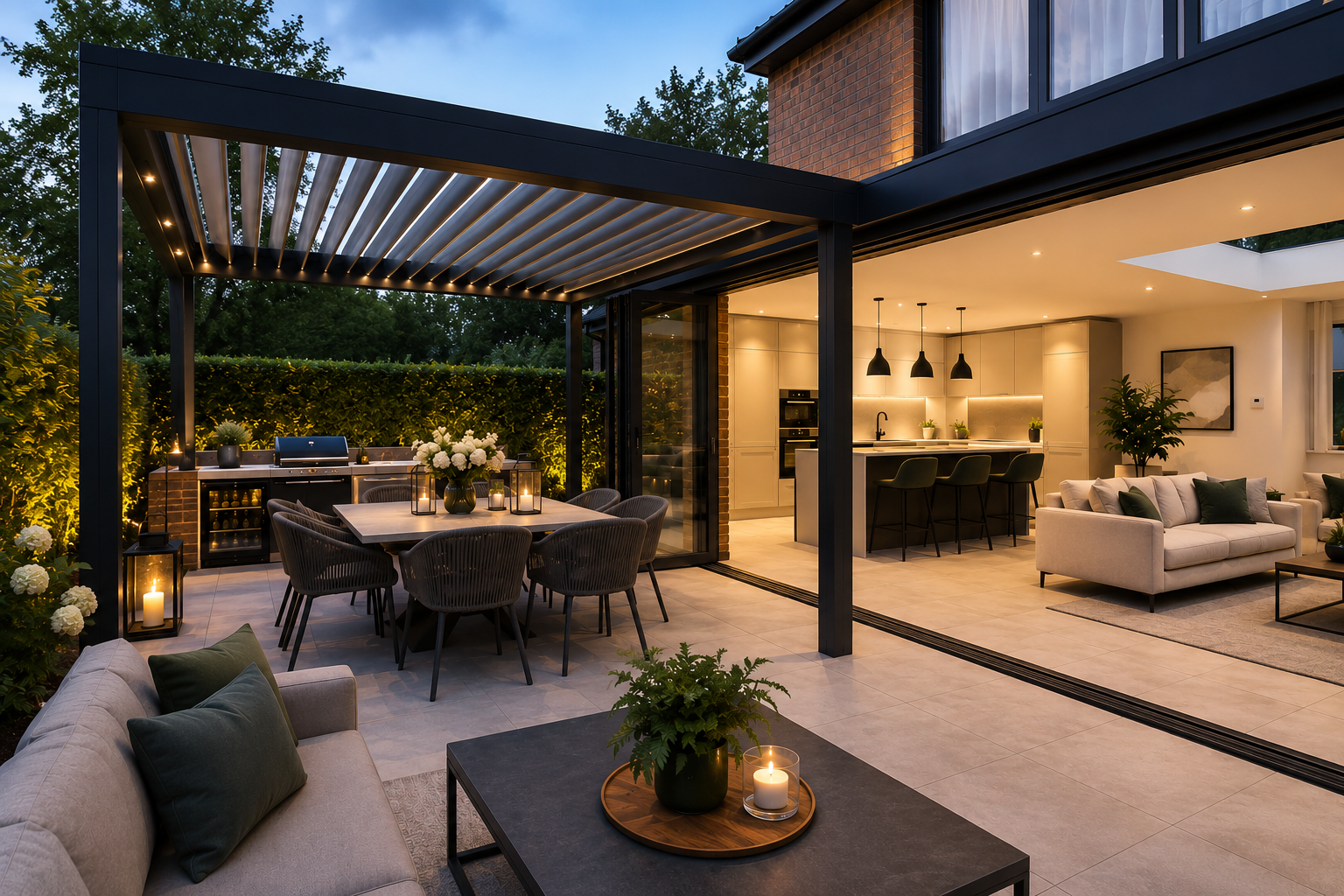
How to Create a Seamless Transition Between Indoor and Outdoor Living
Modern homes are no longer defined solely by their internal spaces. Across London, Surrey and the Home Counties, homeowners are placing greater emphasis on creating a natural connection between their interiors and gardens. The most desirable properties today are those where the transition between inside and outside feels effortless, allowing homeowners to enjoy more space, more natural light and a better quality of life.
This shift has helped drive the popularity of pergolas, awnings, glass rooms and outdoor living features that blur the boundaries between the home and garden. Rather than treating outdoor areas as separate spaces used only during summer, homeowners are increasingly designing them as extensions of their living rooms, kitchens and dining areas.
The result is a more functional home, a more enjoyable lifestyle and often a more valuable property.
In this guide, we’ll explore how to create a seamless transition between indoor and outdoor living and the design principles that can help transform your garden into a true extension of your home.
Why Indoor-Outdoor Living Has Become So Popular
The way we use our homes has changed significantly over recent years.
People want more flexibility from their living spaces. Many now work from home, entertain more frequently at home and place greater importance on spending time outdoors. At the same time, homeowners want to maximise the value of their properties without necessarily undertaking large-scale extensions.
Creating a connection between indoor and outdoor spaces helps achieve all of these objectives.
When designed correctly, outdoor areas become a natural continuation of the home rather than a separate destination. This creates a greater sense of space and allows homeowners to make better use of their gardens throughout the year.
Property experts have also noted the increasing importance of outdoor living when buyers assess homes, particularly in premium residential markets.
Start With the Architecture of Your Home
The most successful indoor-outdoor spaces begin with the property itself.
Rather than viewing the garden as a blank canvas, consider how the architecture of your home can influence the outdoor design.
A contemporary property with large glazing and clean lines may benefit from a minimalist pergola structure that mirrors the home’s design language.
Traditional properties often suit more understated shading solutions that complement existing architectural features.
The goal is consistency.
When the style of the outdoor space reflects the character of the home, the transition naturally feels more cohesive.
This principle applies to materials, colours, textures and overall design choices.
Maximise Natural Light
Natural light is one of the most important elements in creating a connection between interior and exterior spaces.
Large sliding doors, bi-fold doors and floor-to-ceiling glazing help remove visual barriers and allow sunlight to flow through the property.
When homeowners can easily see their outdoor living space from inside, the garden feels like part of the home even when it is not actively being used.
This visual connection creates a stronger relationship between both environments.
The Royal Institute of British Architects highlights the importance of daylight and visual connectivity in residential design.
When planning outdoor improvements, consider how structures such as pergolas and awnings interact with natural light. The objective should be to provide comfort and shade without blocking valuable daylight from entering the property.
Create Consistent Flooring Materials
One of the simplest ways to achieve a seamless transition is through flooring.
When similar materials are used both inside and outside, the eye perceives the spaces as connected.
Many modern homes now use porcelain paving that complements internal floor finishes. While the materials may differ slightly in specification for practical reasons, the appearance remains consistent.
This creates visual continuity and helps blur the distinction between interior and exterior areas.
Even subtle design decisions such as matching tones, textures and patterns can have a significant impact on how connected the spaces feel.
Rather than treating the patio as a separate feature, it should be viewed as an extension of the internal floor plan.
Define Outdoor Rooms
One of the biggest mistakes homeowners make is leaving outdoor spaces without a clear purpose.
Successful indoor-outdoor living relies on creating defined zones that mirror the functions of interior rooms.
A dining area outdoors should feel like a natural extension of the kitchen.
A lounge area should provide the same comfort and atmosphere as an indoor living room.
A sheltered seating area should encourage relaxation in much the same way as an internal family room.
Pergolas play a particularly important role here because they help establish outdoor rooms within the garden.
By creating structure and enclosure, pergolas provide a sense of definition that encourages regular use.
Explore Shade-Space pergola solutions.
Invest in a Bespoke Pergola
Few outdoor structures contribute more to indoor-outdoor living than a pergola.
A well-designed pergola acts as a bridge between the home and garden. It provides shelter, defines outdoor space and creates an environment that can be used throughout much of the year.
Modern pergolas offer a wide range of features including:
- Retractable roofs
- Louvered roof systems
- Integrated lighting
- Outdoor heating
- Side screens
- Automated controls
These features allow homeowners to adapt the space to changing weather conditions while maintaining comfort.
Unlike temporary garden structures, a bespoke pergola becomes part of the property’s overall design and significantly enhances how outdoor spaces are used.
For homeowners seeking a true indoor-outdoor lifestyle, a pergola often serves as the centrepiece of the entire project.
Use Outdoor Furniture That Reflects Your Interior Style
Another effective way to connect indoor and outdoor spaces is through furniture selection.
Many premium outdoor furniture collections now rival indoor furnishings in both comfort and appearance.
Rather than choosing furniture that feels distinctly “garden focused”, homeowners increasingly select pieces that complement their interior design style.
This consistency creates a stronger visual relationship between the two spaces.
For example, contemporary homes may feature neutral colour palettes, clean lines and minimalist furnishings both indoors and outdoors.
Traditional homes may favour softer textures and more classic styling.
The goal is not to create identical environments but rather to establish a shared design language throughout the property.
Incorporate Outdoor Heating
One challenge facing UK homeowners is the climate.
While outdoor spaces can be enjoyed during summer, unpredictable weather often limits their use during cooler months.
Outdoor heating helps address this challenge by extending the usability of outdoor living areas.
Integrated heating systems within pergolas create comfortable environments during spring, autumn and even winter.
This significantly increases the value homeowners derive from their outdoor investment.
More importantly, it supports the concept of seamless living by ensuring outdoor spaces remain practical for much longer periods throughout the year.
Add Lighting for Evening Use
Lighting is often overlooked during outdoor design projects.
However, it plays a critical role in creating atmosphere and extending usability beyond daylight hours.
A carefully designed lighting scheme helps outdoor spaces feel like genuine extensions of the home.
Integrated LED lighting within pergolas can provide ambient illumination for dining and entertaining.
Accent lighting can highlight architectural features and landscaping.
Pathway lighting improves safety while contributing to the overall visual appeal of the garden.
When viewed from inside the home, a well-lit outdoor space remains visually connected even after sunset.
This strengthens the relationship between interior and exterior areas throughout the entire day.
Consider Glass Rooms for Maximum Flexibility
Glass rooms offer another highly effective solution for creating a seamless transition between indoors and outdoors.
Unlike traditional conservatories, modern glass rooms are designed to maintain a strong connection with the surrounding landscape while providing protection from the elements.
They offer flexibility that appeals to many homeowners.
A glass room can serve as a dining area, garden lounge, workspace or entertaining space depending on the homeowner’s needs.
Because the structure remains visually open, occupants continue to enjoy views of the garden while benefiting from shelter and comfort.
Design for Year-Round Enjoyment
The most successful indoor-outdoor spaces are not limited to summer use.
Instead, they are designed to function throughout the year.
This requires careful consideration of shelter, shade, heating and weather protection.
Retractable roofs, adjustable louvres and integrated screens all help create adaptable environments that respond to changing conditions.
By designing for year-round use, homeowners maximise both enjoyment and return on investment.
The outdoor space becomes a permanent feature of daily life rather than a seasonal luxury.
Create a Natural Flow From Kitchen to Garden
For many families, the kitchen serves as the heart of the home.
As a result, creating a direct connection between the kitchen and outdoor dining areas often delivers the greatest impact.
Outdoor dining spaces located adjacent to the kitchen encourage regular use and make entertaining significantly easier.
This practical relationship between indoor and outdoor spaces helps reinforce the feeling that both environments belong to the same living area.
Many luxury homes now incorporate outdoor kitchens, dining zones and pergola-covered terraces directly outside the main kitchen space.
This approach creates a highly functional layout that supports modern lifestyles.
Use Planting to Soften Boundaries
Landscaping plays an important role in creating seamless transitions.
Strategic planting can soften the boundaries between built structures and the natural environment.
Rather than treating outdoor living areas as isolated features, thoughtful landscaping helps integrate them into the wider garden.
Planting can also help guide movement through the space and reinforce visual connections between different zones.
The Royal Horticultural Society offers useful guidance on garden design principles.
Increase Property Appeal
Creating a seamless indoor-outdoor environment is not solely about lifestyle.
It can also improve property appeal and marketability.
Buyers increasingly view outdoor living as an essential feature rather than an optional extra.
Properties that successfully connect interior and exterior spaces often feel larger, more versatile and more desirable.
This is particularly true within premium residential markets where buyers expect outdoor areas to reflect the quality of the home itself.
Many homeowners find that outdoor living improvements not only enhance everyday enjoyment but also strengthen the long-term attractiveness of the property.
Why Homeowners Across Surrey and the Home Counties Are Investing
Across Surrey, Berkshire, Buckinghamshire, Hertfordshire and Greater London, demand for premium outdoor living solutions continues to grow.
Homeowners are recognising that outdoor spaces represent some of the most underutilised areas of their properties.
By introducing pergolas, awnings and glass rooms, they can create environments that support relaxation, entertaining and family life while enhancing the overall appearance of the home.
The combination of lifestyle benefits and potential property value improvements makes outdoor living one of the most attractive home improvement investments available today.
Why Choose Shade-Space?
At Shade-Space, we specialise in creating premium outdoor living environments that seamlessly connect homes and gardens.
Our expertise includes:
- Bespoke pergolas
- Luxury awnings
- Glass rooms
- Outdoor heating
- Integrated lighting
- Complete outdoor living solutions
Every project is designed around the property, lifestyle requirements and architectural character of the home.
Whether you’re looking to create an outdoor dining area, a sheltered entertaining space or a complete outdoor room, our team can help bring your vision to life.
Explore our outdoor living solutions.
Book a Free Survey
If you’re considering transforming your outdoor space, our team can provide expert advice tailored to your property.
Book a free survey today and discover how a bespoke pergola, awning or glass room can help create a seamless transition between indoor and outdoor living.