

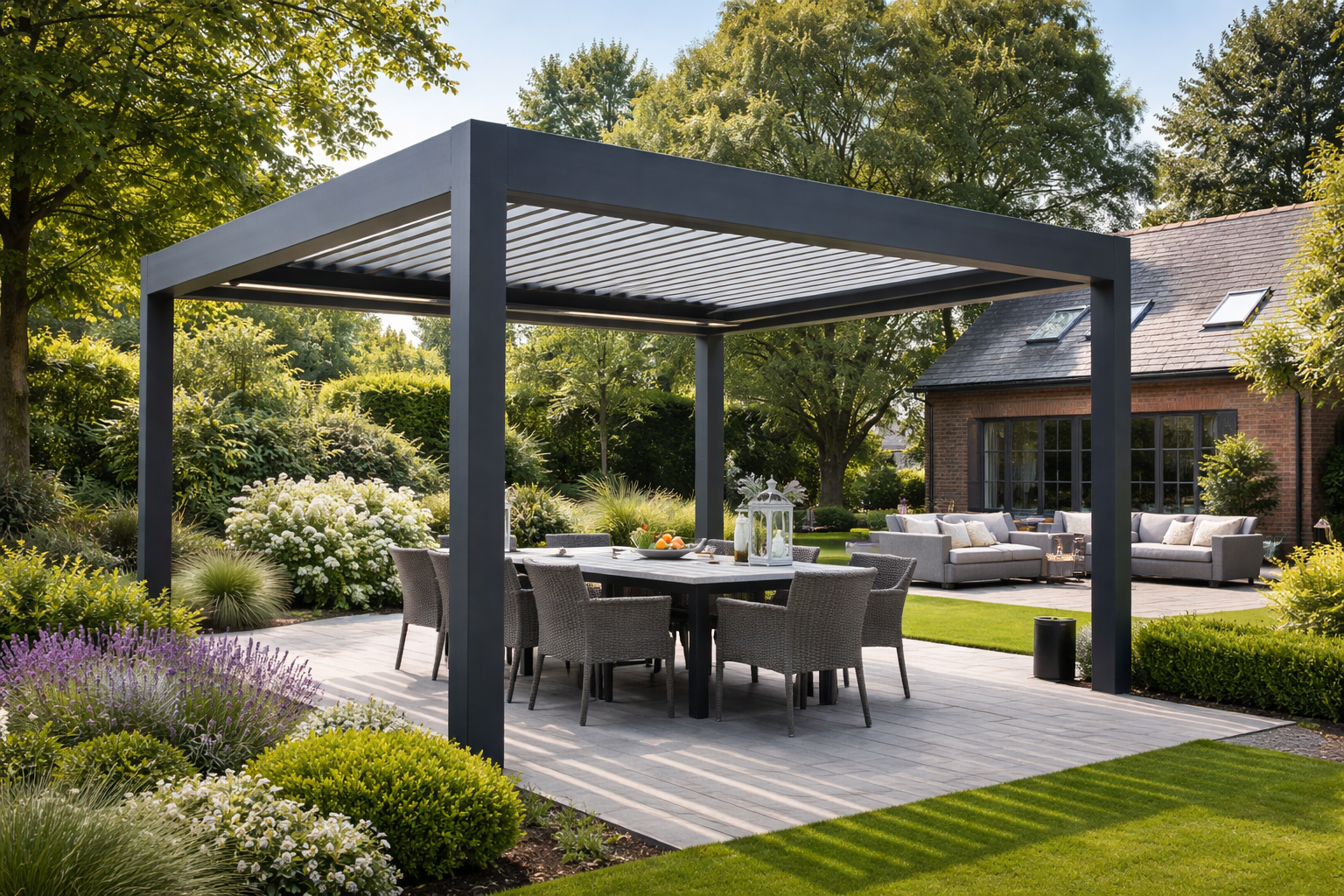
Why Aluminium Pergolas Outperform Timber in the UK Climate
The UK climate is tough on outdoor structures. Rainfall is frequent, humidity stays high, and temperatures shift quickly. These conditions expose weaknesses in materials fast. When choosing a pergola for a UK garden, terrace, or commercial space, aluminium consistently performs better than timber over time.
This article explains why aluminium pergolas are better suited to the UK climate and why they deliver stronger long-term value.
The Reality of the UK Climate
Much of the UK sees rain spread across the year rather than concentrated in one season. Damp conditions linger even during warmer months. Winters bring frost, while summers introduce short periods of intense heat followed by sudden showers.
A pergola sits outdoors all year. Materials must cope with moisture, UV exposure, wind, and temperature change without degrading. This is where aluminium has a clear advantage.
Moisture Resistance Makes the Difference
Timber naturally absorbs moisture. Even pressure-treated wood cannot block water completely. Over time, absorbed moisture causes timber to swell, warp, and crack. As the wood dries, splits form, weakening joints and posts. Damp timber also creates ideal conditions for rot, algae, and mould.
Aluminium does not absorb water. Rain runs off the surface without penetrating the structure. There is no swelling, no rot, and no long-term damage caused by moisture. In a wet climate like the UK, this single factor greatly extends the lifespan of an aluminium pergola.
Maintenance Requirements Over Time
Timber pergolas demand regular attention to stay functional and presentable. Owners often need to repaint or restain wood every year or two. Base posts require frequent checks for early signs of rot. Cracks, soft spots, and surface mould need ongoing treatment.
Aluminium pergolas require very little maintenance. An occasional wash removes dirt and airborne debris. Powder-coated finishes do not need painting or sealing. There is no need for chemical treatments or structural repairs caused by weather exposure. Over several years, the difference in effort and cost becomes significant.
Lifespan and Structural Reliability
Timber pergolas can last, but only when maintenance is consistent. In real-world UK conditions, many timber structures show visible deterioration within a few years if care slips.
Aluminium pergolas are designed for permanent outdoor use. The material does not rot, twist, or split. Frames stay straight and stable through temperature changes. With proper installation, aluminium systems commonly last decades with little change in appearance or performance.
Wind Resistance and Load Handling
Strong winds are common across the UK, especially in exposed gardens and coastal areas. Timber expands and contracts with moisture and temperature. Over time, fixings loosen and joints weaken, reducing stability.
Aluminium pergolas use engineered connections that remain rigid. This allows the structure to handle wind loads more effectively. Aluminium also supports additional features such as motorised louvres, retractable roofs, lighting, heaters, and side screens without compromising strength.
Appearance and Design Consistency
Timber offers a traditional look, but weathering changes its appearance quickly. Fading, staining, and surface damage are common, even with regular care.
Aluminium pergolas maintain a clean, uniform finish. Powder coating resists fading and peeling. Sharp lines and modern profiles suit contemporary homes, restaurants, and commercial outdoor spaces. The structure looks intentional and professional year after year.
Environmental Considerations
Timber often feels like the more sustainable option, but longevity matters. Many timber pergolas rely on chemical treatments and repeated coatings to survive outdoors. Shorter lifespan means earlier replacement and more waste.
Aluminium is fully recyclable and often made using recycled material. Its long lifespan reduces the need for replacement. Over time, this lowers environmental impact and material consumption.
Cost Comparison Over the Long Term
Timber pergolas usually cost less at the start. This initial saving can be misleading. Maintenance products, labour time, repairs, and shorter lifespan all add up.
Aluminium pergolas cost more upfront but save money over time. Reduced maintenance and longer service life mean lower total ownership cost. For commercial spaces, reduced downtime and upkeep make aluminium the more practical investment.
Year-Round Performance in the UK
Outdoor spaces in the UK must adapt to unpredictable weather. Aluminium pergolas work well with modern systems such as adjustable louvres, rain sensors, integrated lighting, and heating. These features extend usability across seasons.
Timber structures struggle to support advanced features without reinforcement. Aluminium handles these additions with ease, making outdoor areas more usable throughout the year.
A Smarter Choice for UK Conditions
For anyone planning a long-term outdoor structure in the UK, aluminium offers clear advantages. It handles moisture without damage, requires minimal maintenance, lasts longer, and supports modern design features.
Timber still suits short-term or decorative projects. For serious outdoor living or commercial use, aluminium pergolas outperform timber in the UK climate on every practical level.